Last time we visited the Yorkshire seaside resort of Scarborough in the company of Francis Joseph Lee, just a few weeks before his untimely death.
Congresses like the British Championships only take place if there’s someone there to organise them, and, as it happened the prime mover of this one was someone who was mentioned in a different context just a few Minor Pieces ago.


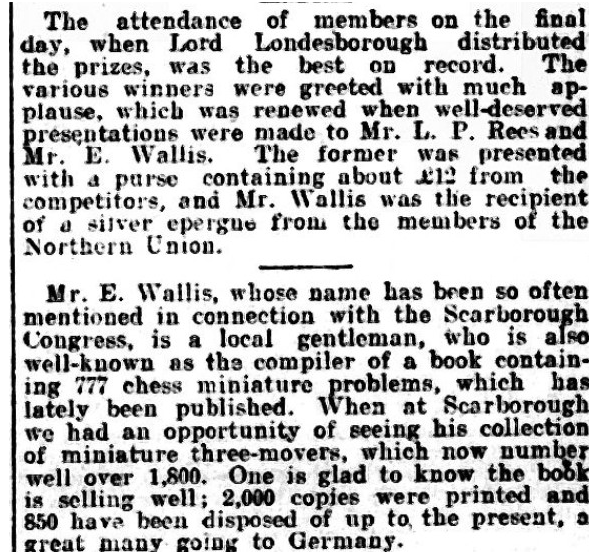
Didn’t Edward Wallis do well? He had a long involvement with the game of chess, and this, along with the publication of his book of miniature problems, was one of his life’s highlights. You might recall that one of George Law Francis Beetholme‘s problems was included therein.
Here he is, pictured in the September 1909 British Chess Magazine.

Edward Wallis had an interesting story to tell, one that involves, as well as chess, chocolate and conscientious objection.
Let’s go back to the middle of the 17th century, when, in the aftermath of the English Civil War, a new religious group founded by George Fox, known as the Society of Friends, or the Quakers, became popular. Jumping forward a century or so, a Quaker named Joseph Fry started a business producing drinking chocolate in Bristol. In 1831 another Quaker, John Cadbury, started producing drinking chocolate in Birmingham. In 1862, Henry Isaac Rowntree, also a member of the Society of Friends, bought out the chocolate making part of the Tuke family’s York business. These three companies, Fry, Cadbury and Rowntree, would become the three major producers of confectionery in Britain through the remainder of the 19th and much of the 20th century.
The Rowntrees had been a prominent Quaker family in Scarborough for a very long time. and, by the early 19th century, John Rowntree was running a grocery business there. His son Joseph moved to York to start a grocers shop in 1822, and it was his son Henry Isaac who started the confectionery business. Joseph’s brother William remained in Scarborough, and it was his grandson, Alderman John Watson Rowntree, who was the chairman of the committee running the 1909 British Championships in his home town.
The Wallis family were also prominent Quakers, from the village of Springfield in Essex, now a suburb of Chelmsford. After his marriage in 1849, Francis Wallis moved from Essex to Scarborough, no doubt in part because of the strong Quaker presence there, setting up as a corn dealer and miller. One of Francis’s daughters, Priscilla Gray Wallis, married George Rowntree, a brother of the aforementioned John Watson. One of Francis’s sons, born in 1852, was Edward Wallis, author of 777 Chess Miniatures in Three (you can read it online here) and the local organiser of the 1909 British Chess Championships.
In 1877 Edward married Dublin born Annie Johnson in London, returning to Scarborough, and, at some point in the 1880s, moving to a house they named Springfield after his home village. Their children were Eleanor (1878), Edward Arnold (1880), Arthur (1881), Dorothea (1883) and Annie Mabel (1885). He ran a grocery and bakery business there for the rest of his life.
On 24 January 1880 Edward had a chess problem published in the Leeds Mercury Weekly Supplement. At 27 years of age he was a relatively late starter in chess.
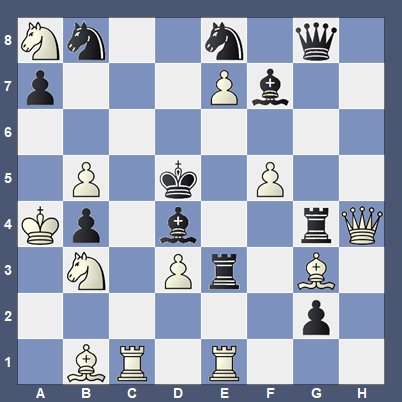
Leeds Mercury Weekly Supplement 24-01-1880
You’ll find the solution at the end of this article.
In the same year he was also seen playing correspondence chess. In this game from a Leeds Mercury tournament he had the better of the opening but rather lost the plot thereafter.
[Event “Leeds Mercury Correspondence Tournament”]
[Date “1880.??.??”]
[White “Bays, George Henry”]
[Black “Wallis, Edward”]
[Result “1-0”]
1. e4 e5 2. Nf3 Nc6 3. d4 exd4 4. Nxd4 Bc5 5. Nxc6 Qf6 6. Qf3 Qxf3 7. gxf3 bxc6 8. Bf4 d6 9. Bc4 Be6 10. Nd2 Ne7 11. Be3 Bb6 12. Rg1 Ng6 13. O-O-O O-O 14. Bb3 Bxb3 15. Nxb3 f5 16. c4 Bxe3+ 17. fxe3 Ne5 18. Nd2 f4 19. exf4 Rxf4 20. Rg3 Raf8 21. Rf1 h5 22. Kd1 h4 23. Rh3 d5 24. cxd5 R8f6 25. dxc6 Rg6 26. Ke2 Rxc6 27. Rg1 Nf7 28. Ke3 g5 29. b3 Re6 30. Nc4 Kf8 31. Rg4 Rxg4 32. fxg4 Nh6 33. Rf3+ Ke8 34. h3 Re7 35. Rf6 Rh7 36. Rg6 Nxg4+ 37. Kf3 1-0
In this game, probably played in the same event, he defeated schoolteacher GW Farrow, born in Scarborough, but by that time living in Hull
[Event “Leeds Mercury Correspondence Tournament”]
[Date “1880.??.??”]
[White “Wallis, Edward”]
[Black “Farrow, George Wright”]
[Result “1-0”]
1. e4 e5 2. Nf3 Nf6 3. Nxe5 d6 4. Nf3 Nxe4 5. d4 d5 6. Bd3 Nc6 7. O-O Be7 8. c4 Nf6 9. h3 Be6 10. Qb3 dxc4 11. Bxc4 Bxc4 12. Qxc4 O-O 13. Nc3 Bd6 14. Bg5 h6 15. Bxf6 Qxf6 16. Nd5 Qd8 17. Rae1 Qd7 18. Ne5 Bxe5 19. dxe5 Rad8 20. Rd1 Qe6 21. f4 Rd7 22. Nf6+ gxf6 23. Qxe6 fxe6 24. Rxd7 Rf7 25. Rfd1 Nb4 26. Rxf7 Kxf7 27. Rd7+ Kg6 28. Rxc7 Nxa2 29. Rxb7 Nc1 30. f5+ Kxf5 31. exf6 Kxf6 32. Rxa7 1-0
In 1881 he entered a correspondence tournament run by the Preston Guardian. This win against GW Farrow was almost certainly (although this isn’t specificed in the source) played in the 1881 edition of the Leeds Mercury competition.
[Event “Correspondence”]
[Date “1881.??.??”]
[White “Farrow, George Wright”]
[Black “Wallis, Edward”]
[Result “0-1”]
1. e4 e5 2. f4 exf4 3. Bc4 d5 4. Bxd5 Qh4+ 5. Kf1 g5 6. Nc3 Bg7 7. d4 Ne7 8. Nf3 Qh5 9. h4 h6 10. Kg1 g4 11. Ne1 f3 12. Be3 Nbc6 13. Qd2 a6 14. Bxc6+ bxc6 15. Nd3 Ng6 16. Rf1 O-O 17. e5 Bf5 18. Ne1 Rad8 19. Qf2 c5 20. gxf3 cxd4 21. Bxd4 Nf4 22. Ng2 Nxg2 23. f4 g3 24. Qxg2 Rxd4 25. Rf3 Rd1+ 26. Rf1 Rd6 27. Rf3 Rd2 28. Qxg3 Qg6 29. Qxg6 fxg6 30. Rf2 Rxf2 31. Kxf2 Bxe5 32. fxe5 Be4+ 33. Kg1 Bxh1 34. Kxh1 Re8 35. Kg2 Rxe5 0-1
In 1882 he won an exciting, but not entirely sound, game against Scarborough Chess Club secretary and chemist Henry Chapman.
[Event “Scarborough Chess Club”]
[Date “1882.??.??”]
[White “Chapman, Henry”]
[Black “Wallis, Edward”]
[Result “0-1”]
1. e4 e5 2. Nf3 Nc6 3. Nc3 Bc5 4. a3 a6 5. Bc4 d6 6. Nd5 Bg4 7. h3 Bh5 8. g4 Bg6 9. d3 h6 10. b4 Ba7 11. c3 b5 12. Ba2 Nce7 13. a4 c6 14. Nxe7 Nxe7 15. Nh4 d5 16. Nxg6 Nxg6 17. exd5 cxd5 18. Qf3 e4 19. dxe4 Ne5 20. Qe2 Qf6 21. Bxd5 Rd8 22. Be3 Bxe3 23. fxe3 Nf3+ 24. Kd1 Qxc3 25. Rc1 Rxd5+ 26. exd5 Qb3+ 27. Qc2 Qxd5+ 28. Ke2 O-O 29. Rhf1 Nd4+ 30. exd4 Qg2+ 31. Rf2 Re8+ 32. Kd1 Qg1+ 33. Kd2 Qxf2+ 34. Kd3 Re3# 0-1
In January 1883 he played on Board 53 in a match between Lancashire and Yorkshire, losing his game against Dr Dean of Burnley. The Manchester Courier (27 January), with an element of hyperbole, claimed that this was “the greatest chess match which has ever taken place in the history of the royal game, which extends over a period of more than 3,000 years”.
Here’s a game he lost in another correspondence tournament run by the Leeds Mercury. After White’s alert response to his erroneous 22nd move he could only choose which bishop to lose.
[Event “Leeds Mercury Correspondence”]
[Date “1884.??.??”]
[White “Rea, William”]
[Black “Wallis, Edward”]
[Result “1-0”]
1. e4 e5 2. Nf3 Nc6 3. Bb5 a6 4. Ba4 Nf6 5. O-O Nxe4 6. Re1 Nc5 7. Bxc6 dxc6 8. d4 Ne6 9. Nxe5 Be7 10. Be3 O-O 11. f4 f6 12. Nf3 Bd6 13. g3 Re8 14. c3 Nf8 15. Nh4 Ng6 16. Nxg6 hxg6 17. Nd2 Be6 18. Nf3 Kf7 19. Nh4 Qd7 20. Qc2 Bf5 21. Qb3+ Be6 22. c4 Rh8 23. f5 gxf5 24. d5 Bxd5 25. cxd5 c5 26. Bf2 g5 27. Nf3 f4 28. Re6 1-0
He also lost this game, played in a correspondence game between two players representing clubs at almost opposite ends of the country, misplaying a tricky ending. It’s not clear whether or not this was a formal match between the two clubs.
[Event “Horsham v Scarborough Correspondence”]
[Date “1887.??.??”]
[White “Baxter, Samuel”]
[Black “Wallis, Edward”]
[Result “1-0”]
1. e4 e5 2. Nf3 Nf6 3. Nxe5 d6 4. Nf3 Nxe4 5. d4 d5 6. Bd3 Nc6 7. c4 Nf6 8. c5 Be6 9. O-O Be7 10. Be3 Ne4 11. Nbd2 f5 12. Bb5 O-O 13. Nb3 f4 14. Bd2 Bg4 15. Be2 Qe8 16. Ne1 Bxe2 17. Qxe2 g5 18. f3 Qh5 19. Nd3 Rf6 20. Nf2 Nxf2 21. Rxf2 Rh6 22. h3 a6 23. Re1 Rf8 24. Na5 Bf6 25. Nxc6 bxc6 26. Bc3 Bg7 27. Qxa6 Qh4 28. Qe2 Qg3 29. a4 g4 30. fxg4 f3 31. Rxf3 Rxf3 32. Qxf3 Bxd4+ 33. Bxd4 Qxe1+ 34. Kh2 Qe4 35. Qxe4 dxe4 36. Kg3 Re6 37. Kf4 Kf7 38. b4 Re8 39. g5 Ra8 40. a5 Rb8 41. Bc3 Kg6 42. Kxe4 Kxg5 43. g3 Rd8 44. Be5 Re8 45. Kd4 Kf5 46. Bxc7 Ke6 47. Be5 Kd7 48. Ke4 Ra8 49. Kf4 Rf8+ 50. Kg5 Rf3 51. Kh6 Rb3 52. Kxh7 Ke6 53. Bc7 Kf7 54. Kh6 Rxb4 55. Kg5 Rb7 56. Bb6 Ke6 57. a6 Rb8 58. a7 1-0
In 1891 Scarborough were treated to a visit by our good friend Francis Joseph Lee.

An excellent result for Edward: it would have been good if they’d published the game. Mr F Wallis was probably Edward’s father Francis, but we’ll come to another possibility later.
Later in the same year he was one of the protagonists in a living chess game raising money for a good cause.


During this period, Edward Wallis was playing on top board for Scarborough, but, to be honest, there wasn’t that much opposition. Most of the county’s stronger players resided in the larger towns and cities.
In January 1893 he was selected to represent the North of England against the South in a 100 board megamatch in Birmingham, but ended up not in the match itself but on the bottom reserve board where he won his game against Wiltshire’s CJ Woodrow.
In April Scarborough welcomed another professional visitor: Samuel Tinsley. This time Wallis was less successful.

“… in a game known as the Queen’s Fianchetto?” I think the journalist was rather confused.
Here’s a report on a 1894 match against Bridlington, the days when matches were interrupted half way through for an excellent tea and appropriate speeches.

You’ll see that (presumably) Edward’s father won both his games on bottom board. The Mr Yewdall on Board 7 was the teenage Francis Edward Yewdall, who, almost 40 years later, would become the Secretary of Richmond & Kew Chess Club (where he was the assistant borough surveyor), and therefore, if you want to stretch a point, one of my Great Predecessors. Charles Empson Simpson, on Board 2, was Edward’s next door neighbour. You might notice some name connections: Wallis and Simpson living in adjacent houses, and Wallis (but not Simpson) living in Springfield. Bridlington, very unusually for the time, fielded a lady on second board: Eliza Mary Thorold, sister of their top board Edmund, who had been for many years one of the country’s top amateurs but was now approaching the end of his career.
Here’s one of the top board games, in which both sides missed chances.
[Event “Scarborough v Bridlington B1”]
[Date “1894.03.07”]
[White “Thorold, Edmund”]
[Black “Wallis, Edward”]
[Result “1-0”]
1. e4 e5 2. f4 exf4 3. Nf3 g5 4. h4 g4 5. Ng5 h6 6. Nxf7 Kxf7 7. d4 d5 8. Bxf4 Nf6 9. e5 Qe8 10. Bd3 Nh5 11. O-O Kg7 12. Nc3 c6 13. Qd2 Bb4 14. Bxh6+ Rxh6 15. Qg5+ Rg6 16. Bxg6 Qxg6 17. Qd8 Be6 18. Rf2 g3 19. Rf3 Bg4 20. Raf1 Bxf3 21. Rxf3 Na6 22. Qxa8 Kh6 23. Ne2 Qxc2 24. Nxg3 Nf4 25. Qh8+ Qh7 26. Nf5+ 1-0
A few weeks later there was another North v South megamatch, over 108 boards. Edward Wallis was on Board 102, losing to Horace Fabian Cheshire, who would soon find fame as the editor of the Hastings 1895 tournament book.
By 1897 he’d ceded top board to Charles Empson Simpson, and in 1899 he played on Board 9 for the North and East Ridings of Yorkshire in a match against the West Riding, losing his game against Isaac McIntyre Brown, the editor of the British Chess Magazine. Simpson lost on fourth board to John Musgrove.
One thing that you may know about the Quakers is that they are noted for their liberal views, many of their members being committed pacifists, and that was certainly true of the extended Rowntree family in Scarborough.
Appalled by the atrocities of the Second Boer War, a South African Conciliation Committee was set up in Scarborough under the presidency of Joshua Rowntree, a cousin of Henry Isaac and a former Liberal MP for the town. In March 1900 a meeting was arranged. One of the speakers was Samuel Cronwright, British born but living in South Africa and married to author and anti-war campaigner Olive Schreiner, still remembered today for her 1883 novel The Story of an African Farm. The other speaker, John A Hobson, was a prominent anti-imperialist and anti-capitalist.
There were some in Scarborough who considered their views heretical and unpatriotic. Word got round about the meeting, and a crowd, brandishing Union Jacks, formed outside, smashing the windows and throwing stones. Not content with that, some of them proceeded to vandalise the shops and houses of other members of the Rowntree family.
Perhaps you were, like me, unaware of this story, which, of course, has many resonances today. If you’d like to read more there’s a paper on the riots here.
If you’re interested in the history of the Rowntree family I’d recommend visiting the Rowntree Society website. This page is a good place to start.
While all this was going on, it appears that Edward Wallis was engaged in a long-range postal game.

I’m pretty sure, although it’s not mentioned in the press, that FJ Wallis was Edward’s brother Francis John Wallis, and that he had emigrated to Australia in 1891, becoming prominent in Sydney chess circles. In that case the F Wallis mentioned twice above would definitely be Edward’s father Francis senior.
A few years later, this game was published in the British Chess Magazine with, typically for the time, rather inaccurate annotations by Bellingham. The loser, at least in my secondary source, is incorrectly identified as AG Wallis.
[Event “Correspondence 1898-1901”]
[Date “1901.??.??”]
[White “Wallis, Edward”]
[Black “Wallis, Francis John”]
[Result “1-0”]
1. e4 e5 2. Nf3 Nc6 3. Bc4 Bc5 4. b4 Bxb4 5. c3 Be7 6. d4 exd4 7. Qb3 Nf6 8. Bxf7+ Kf8 9. e5 Ng4 10. cxd4 Na5 11. Qc2 Kxf7 12. Qf5+ Kg8 13. Qxg4 Bb4+ 14. Nbd2 d6 15. e6 Qf6 16. d5 Qxa1 17. O-O Bxd2 18. Bxd2 Qf6 19. Bxa5 b6 20. Bd2 Bb7 21. Re1 Bxd5 22. e7 Bc6 23. Bc3 Qg6 24. Qc4+ d5 25. Qd4 Qf6 26. Ne5 Bb7 27. Qa4 c6 28. Nc4 Qg6 29. Nd6 h6 30. Nxb7 Kh7 31. Qd4 Rhg8 32. f4 Rae8 33. Qe5 Qc2 34. Ba1 Qg6 35. f5 Qg5 36. Nd6 1-0
By now Scarborough Chess Club seems to have become inactive, putting Edward Wallis’s chess career on hold. His name started to reappear towards the end of 1907, when he made two contributions to a testimonial for FR Gittins, the author of The Chess Bouquet, which was being organised by the always witty Philip Hamilton Williams. He also announced that he was collecting miniature (no more than 7 pieces on the board) mates in 3. In 1908 he published a self-mate in 16 based on an earlier problem by Frederick Baird, but it turned out to be unsound as there were quicker solutions.
By October 1908 his book was (self-)published, receiving positive reviews.


Then, in 1909, came the second highlight of his life: the British Chess Championships in his home town, which you read about earlier. Although he was referred to as being from Scarborough Chess Club, I haven’t found any other mentions of the club between the late 1890s and the 1920s.
In 1910 he had a problem published in The Chess Amateur. It’s a mate in 3, but not a miniature.
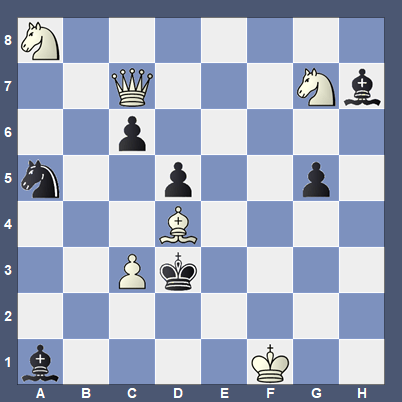
Now, it seems, having perhaps fulfilled his two ambitions, he cut down his chess activities, confining himself to solving problems in newspaper columns.
When the First World War broke out his family commitment to pacifism was tested again. The older of his sons, Edward Arnold (below), registered as a conscientious objector, serving in the Friends Ambulance Corps between 1915 and 1918.

His younger son, Arthur, on the other hand, joined the RAF in 1918, but as a lecturer rather than in a combat role.
In 1917 George Rowntree and Edward Wallis unexpectedly fell foul of the law for selling semolina above the maximum fixed price.

In 1921, the census tells us that Edward was still running the family business at the age of 69, living with his wife and youngest daughter, who was working as a hospital nurse.
He died a year later, this newspaper obituary erroneously adding two years to his age.

Edward Wallis wasn’t, by the highest standards, a very strong player, nor was he a great problemist. But, as well as taking part in competitions, both over the board and by post, and occasionally composing problems, he was a true chess enthusiast, an author, an organiser and a collector, with one of the finest chess libraries in England (I wonder what happened to it). He was also a man who, along with his extended family and friends, lived his life through the principles expounded by the liberal Quakers: pacifism, integrity and service to the community. A life, I think, that deserves to be remembered, and a story that deserves to be told.

Next time, I’ll continue the story by introducing you to his friend who kindly contributed the Hints to Solvers to his book: Alfred Neave Brayshaw. Be sure not to miss it.
Sources and Acknowledgements
ancestry.co.uk
findmypast.co.uk/British Newspaper Library
Digital Chess Problems (Anders Thulin) website (Wallis book here)
Wikipedia
MESON Chess Problem Database (Brian Stephenson)
BritBase (John Saunders: thanks for the photo)
Yorkshire Chess History (Steve Mann): Edward Wallis here
Gerard Killoran for the Bays, Farrow and Chapman games.
David McAlister for reconstructing the Bays game (on the English Chess Forum)
Rowntree Society website
Guise Family website (George Rowntree here)
The Men Who Said No (Peace Pledge Union website: Edward Arnold Wallis here)
Solutions to problems:
Problem 1:
1. Qf6! is the key, threatening Nc7+, Qd6+ and Qxd4+. There are short mates in reply to either queen capture. You can see the full solution here.
Problem 2:
1. Qh2! (threat: Qe2#) 1… Kc4 (1… Ke4 2. Qe2+ Kf4 3. Be5#) (1… Bxc3 2. Qe2+ Kxd4 3. Ne6#) 2. Qa2+ Kb5 (2… Nb3 3. Qa6#) (2… Kd3 3. Qe2#) 3. Nc7#


 Minor Pieces
Leave a reply to Minor Pieces 72: Alfred Neave Brayshaw – Minor Pieces Cancel reply