Last time we looked at my friend Phil Poyser’s chess career. This time, I want to look at his family history and his career as an artist.
I’ll show you some of his artwork as well, often showing local scenes which are very familiar to me.
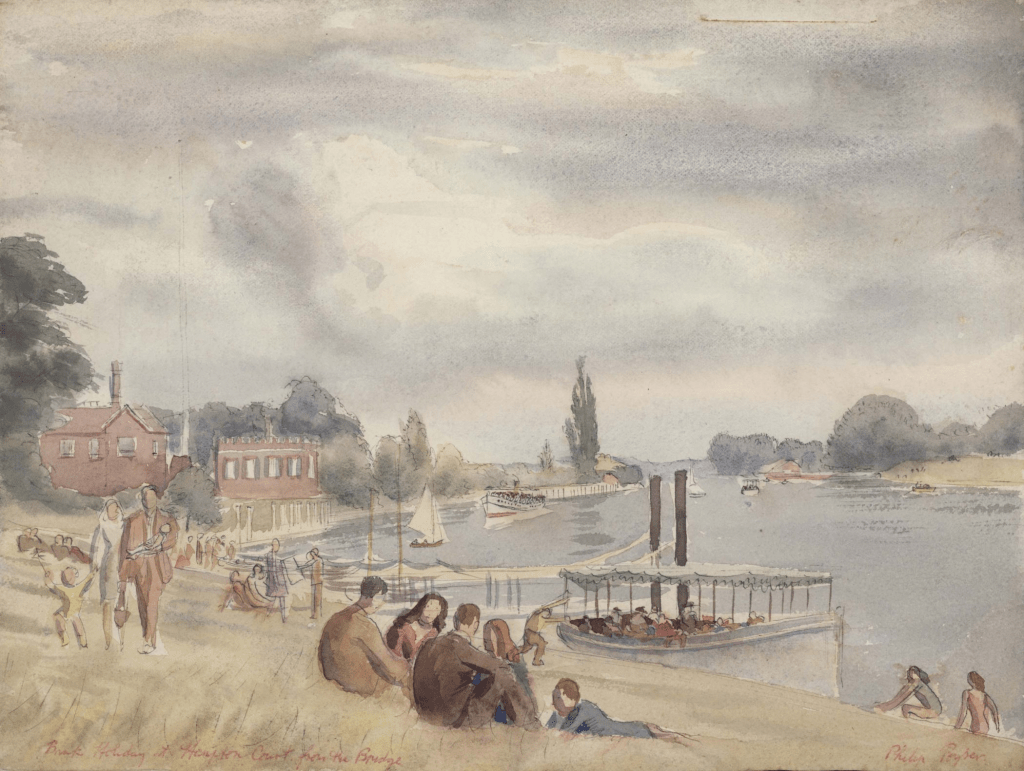
Orleans House Gallery, Twickenham
If you’re looking for chess you might want to give this a miss, but if you’re interested in art, genealogy or social history, you should certainly read on.
I’ll start by introducing you to Thomas Poyser.
The Poyser name comes from the Peak District, the villages between Leek, in Staffordshire, and Ashbourne, in Derbyshire. Thomas, like many of his family a farmer, was born in Butterton, a small village near Leek, in 1830.
Nearby you’ll find Thor’s Cave, Alton Towers and the village of Cheddleton which, for obscure historical reasons, gives its name to a 4NCL chess team.
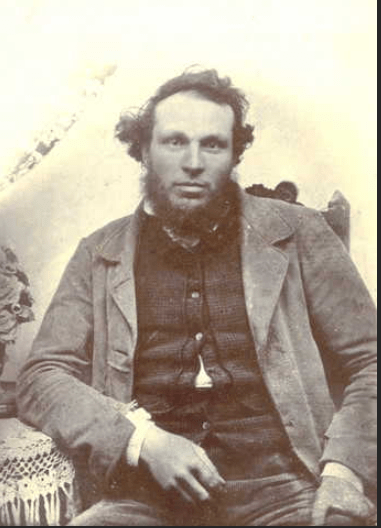
Here he is, and you can certainly see a family resemblance to Phil. At the age of 20 he married Betsy Carter Burnett, and, although he had a relatively short life, dying in 1875, he found time to father nine sons (including two sets of twins) and three daughters.
Although most of them stayed in the immediate area, others chose to emigrate. Peveril, for example (named after Peveril Castle, or perhaps the Scott novel Peveril of the Peak which it inspired), moved to Canada. Reuben Poyser, though, chose Australia. In 1882, at the age of only 19, he sailed to the other side of the world on the Scottish Admiral, and travelled the country finding casual work wherever he could. Like Walter Bodycoat, he spent some time prospecting for gold in Kalgoorlie before settling in northern New South Wales. According to family legend he won a farm in a raffle, bought another farm and invited his youngest brother Jim (James Edward Poyser, born in 1868) to join him.
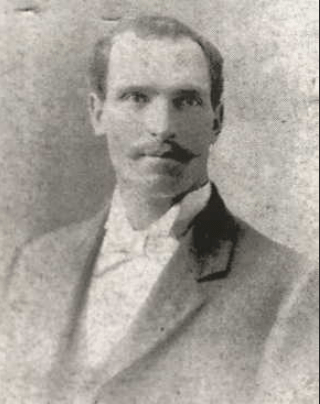
At some point in the 1890s Jim moved to Perth where he joined the Mounted Police. In 1900, he married a woman with a rather extraordinary name, and a rather extraordinary family. Here’s Jim, from an online family tree. We’ll return to him later.
Now I have to introduce you to Lewis Hasluck.
The Haslucks were originally from Yorkshire and Lincolnshire, but one branch moved to Birmingham, working in the jewellery trade. Samuel Hasluck moved from there to Hatton Garden, where Henry Peachey’s family would later be found, and where his third son, Lewis, was born in 1824. Lewis’s great grandson Nick has written a sanitised account of his life, but some of the facts are missing.
In 1847 Lewis married Fanny Newby, but the union proved, it seems, unsuccessful. Fanny disappeared from the records until after her death, where her probate record suggests she had some impressively named connections.

“wife or widow of Lewis Hasluck” – in fact Lewis was still alive, and had had (at least) two further relationships, each of which produced three children.
The first of these relationships was with Isabella Harriet Turner, who had married Henry Hussey in 1843 and had two sons. Henry may still have been alive at this point.
Lewis and Isabella fled to Adelaide, South Australia, where their first child, a son named Paul Nooncree Hasluck, was born in 1855. Nooncree? Perhaps this means something in an indiginous Australian language but I can’t find anything further.
By 1859 they’d returned to England, where the birth of another son, Walter Duncan, was recorded in Ringwood, Hampshire. The 1861 census found Lewis running a farm of 90 acres in nearby Ellingham, in the New Forest, employing three men and two boys. Another son, named Samuel Lewis after his grandfather and father would be born there the following year.
By 1865, though, he’d moved back to Central London, to Tottenham Court Road, resuming his previous career as a watch maker and jeweller. The 1871 census is strange: he is recorded twice, as both husband and wife. Was that a mistake or was Isabella not there. Walter and Samuel were living with Lewis, but Paul was nowhere to be seen.
Lewis may well have started another affair by this point, with the much younger Rosa Jane Croker. Rosa had been born on 21 July 1850, a hundred years and one week before my birth (and a hundred years less than one week after the death of JS Bach). She lived very close to where I lived in 1950 as well: she grew up in Sandy Lane, Hampton Wick, alongside Bushy Park and just a few yards from where Harry Jackson would later end his life. Her father was a gardener who may possibly have been working in the park.
He might also have worked in the gardens at Hampton Court, a stroll through the park away: in which case he’d have recognised this.
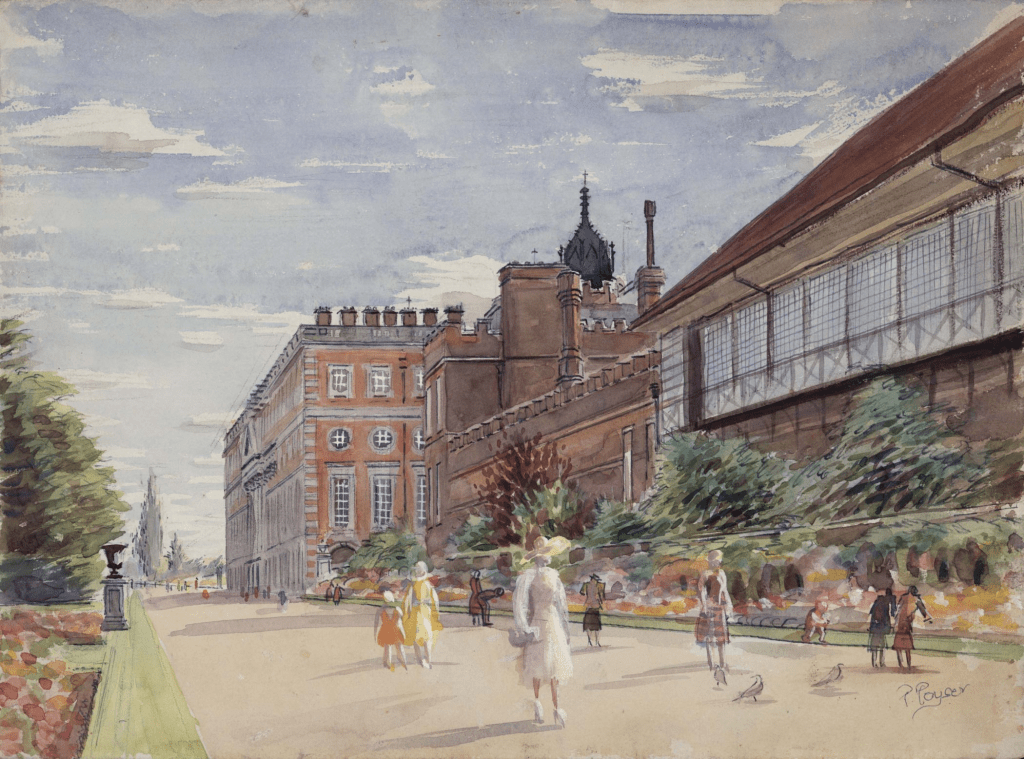
Orleans House Gallery, Twickenham
75 years on, the view is very much the same today.
In the second quarter of 1872 a son was born, not given the surname Hasluck but: wait for it … Caedwalla! Why did they choose the name of a 7th century King of Wessex? I’ve really no idea.
And what was the boy called? Again, you’ll never guess. Ethel! You’ve heard of a Boy Named Sue, but here was a Boy Named Ethel. Not Ethelred or Ethelbert, which would have been understandable (and fit in with the Anglo-Saxon Caedwalla). His middle name: again you’ll never guess. Meernaa!! Apparently an Australian indigenous word said to mean ‘joyful spring of fresh water’. Again this sounds more like a girl’s name. Myrna Loy? Two years later, another boy arrived, named, rather more prosaically, Lewis Oswald. Lewis must have liked his own name as it was also the middle name of one of his older sons.
The two births were registered in Southwark and Kensington respectively, which suggests that the jewellery business had shut down by 1872.
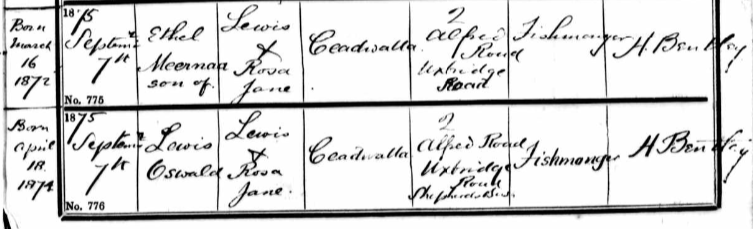
The two boys were both baptised in 1875 (the surname appearing as Ceadwalla), and, look! Lewis is no longer a farmer or a jeweller, but … a fishmonger in Shepherd’s Bush, very close to where Queen’s Park Rangers would later play football. It sure ’twas a wonder.
It must have been immediately after these baptisms that Lewis, Rosa and their two young sons set sail for Australia on the Lady Louisa, arriving in Fremantle in December 1875.
Lewis Hasluck was seemingly a man who could turn his hand to any occupation, but work in Perth wasn’t easy to come by. Meanwhile, in 1877 another child was born, his sixth child and first daugher.
What was she called? Neenaa (or Neena, records vary) Sarah Caedwalla Hasluck! Neenaa? It sounds like a police siren to me, but perhaps it’s an imaginative version of Nina. Or maybe it’s an indigenous name.
Lewis eventually ran an antique shop in Perth, whose back room became an ‘attractive rendezvous of collectors of art’, supplementing his income by giving drawing lessons, just as one of his grandsons would later do. He died in 1896, which would have been about the same time his only daughter befriended an English born police officer named Jim Poyser. A police officer and a police siren would surely make a good match.
And so it did. Jim and Neenaa married in 1900, and children soon arrived: Evelyn, Edward, who sadly died in infancy, Raymond, Mervyn and Olive. They then decided to move back to England, along with Rosa, where, as you saw last time, their youngest son, Philip Leighton Poyser was born.
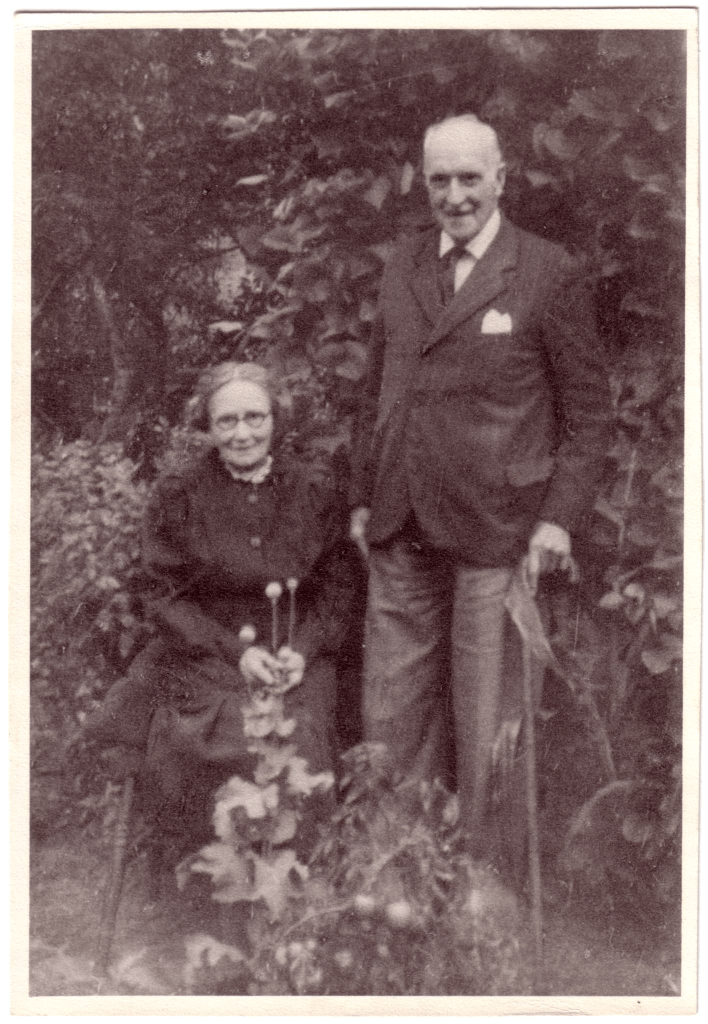
Here they are, later in life. Phil would use this photograph as a basis for a portrait of Neenaa, which, from the inscription at the top may have been sent to his brother Ray in America. I’m not sure who Nora/Nona is, though: Ray’s wife was Florence.
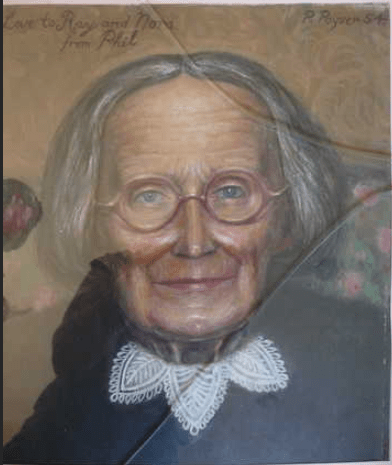
Here’s another painting of Neenaa, from, by the look of it, about the same time.
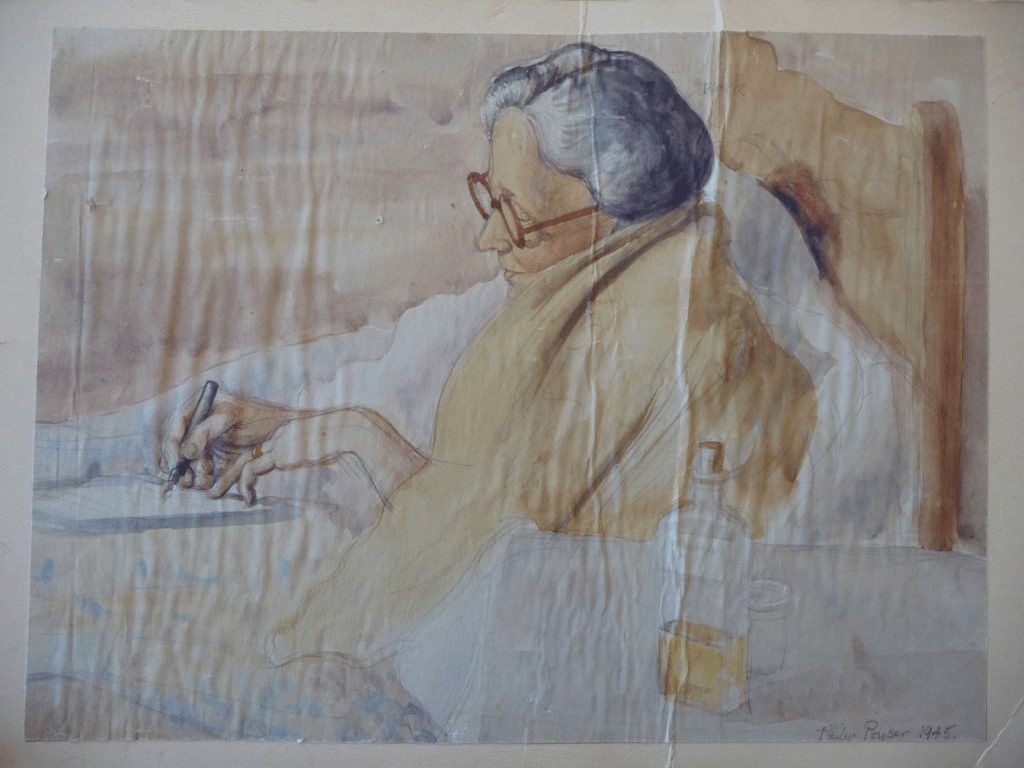
Last time, you saw that the family were living in St Margarets, where Rosa died in 1927.

You’ll see that probate was granted (this was in 1937, a decade after her death) to her daughter and her grandson Mervyn, who had by that time followed his sister into teaching.
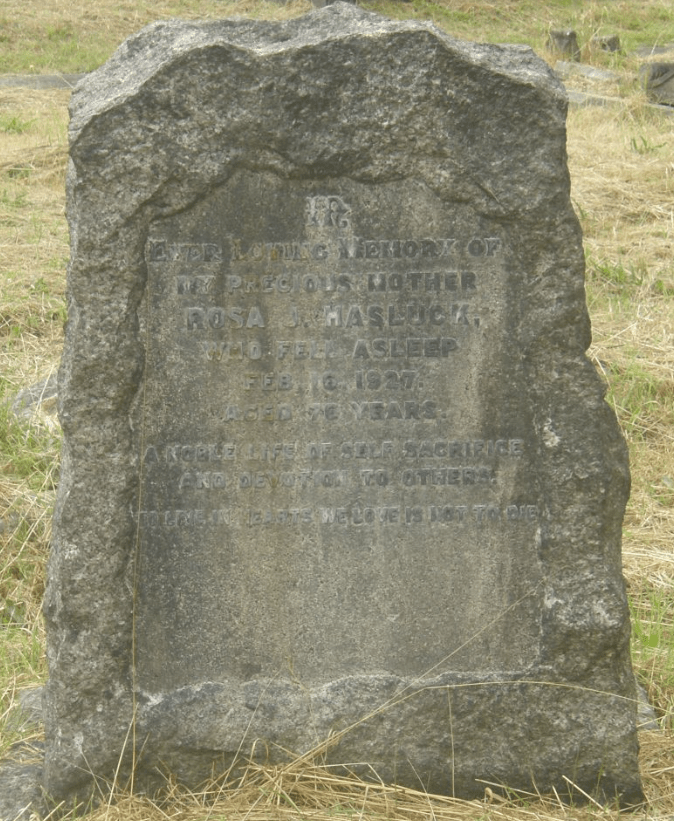
Rosa was buried in Isleworth Cemetery, just behind West Middlesex Hospital, where I was born 23 years later. The inscription on her gravestone reads:
| In ever loving memory of my precious mother ROSA J HASLUCK who fell asleep Feb 16 1927 aged 76 years. A noble life of self sacrifice and devotion to others. To live in hearts we love is not to die. |
We saw last time that the young Phil made a brief appearance over the chessboard in 1928, shortly after his grandmother’s death.
But his main interest was in art, rather than chess. According to an online biography:
From a very early age it was clear that red-headed Phil had a strong artistic bent. He loved drawing and painting, and as he got older he studied at the Willesden School of Art and the Richmond School of Art in London. He also studied overseas in Paris, France and Antwerp, Belgium.
Here was an ambitious young man, corresponding with Augustus John, who encouraged him in his early career. This letter, from 1934, has survived.
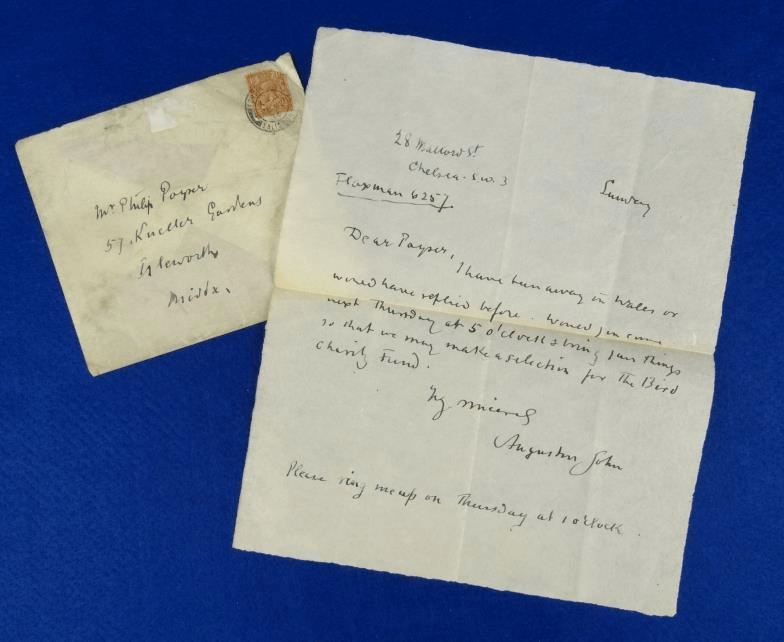
Correspondence with Clive Bell (1939) and Kenneth (Civilisation) Clark (1946) has also survived. He seems to have been in touch with almost everyone who was anyone in the art world at the time.
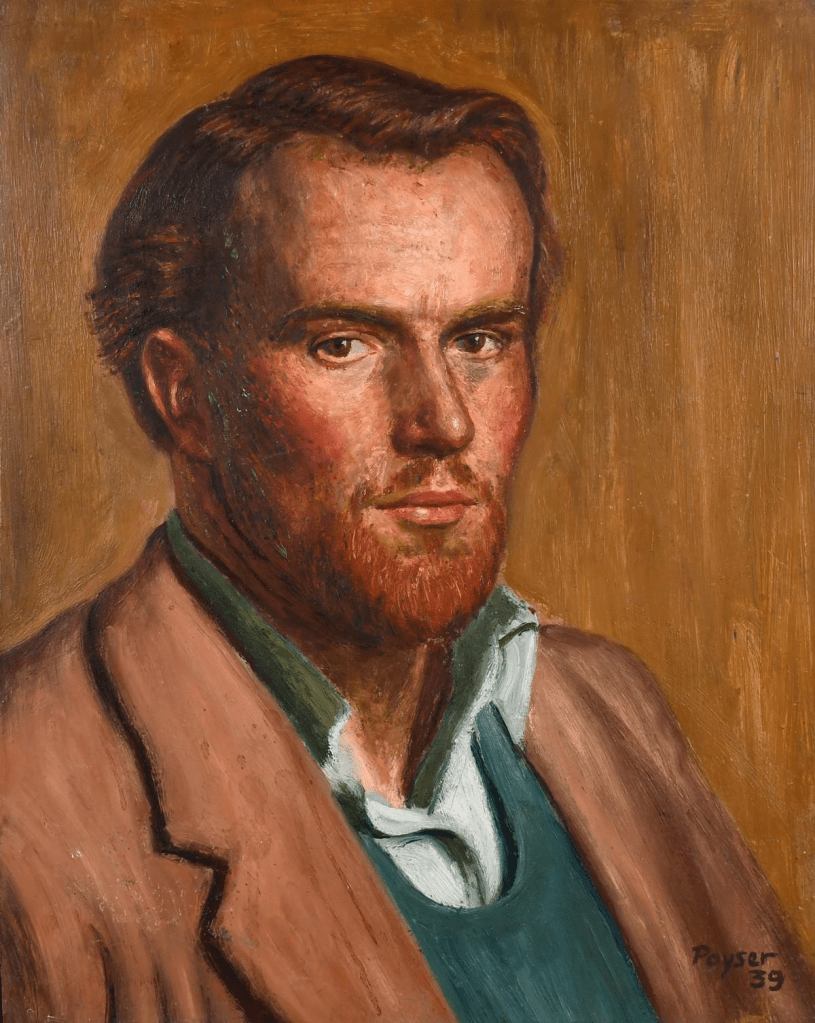
Here’s a self-portrait of red-headed Phil (his hair was grey by the time I met him) from 1939, when, as you will have seen last time, he was living in Richmond, working as an artist and art teacher.
He also sketched George Bernard Shaw and Herbert Lom.
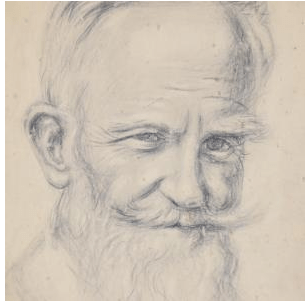
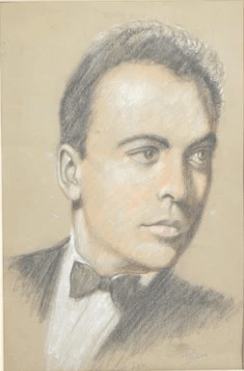
(Sold at auction)
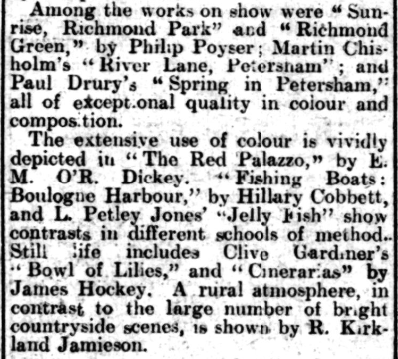
In 1944 Philip had two paintings exhibited in Richmond.
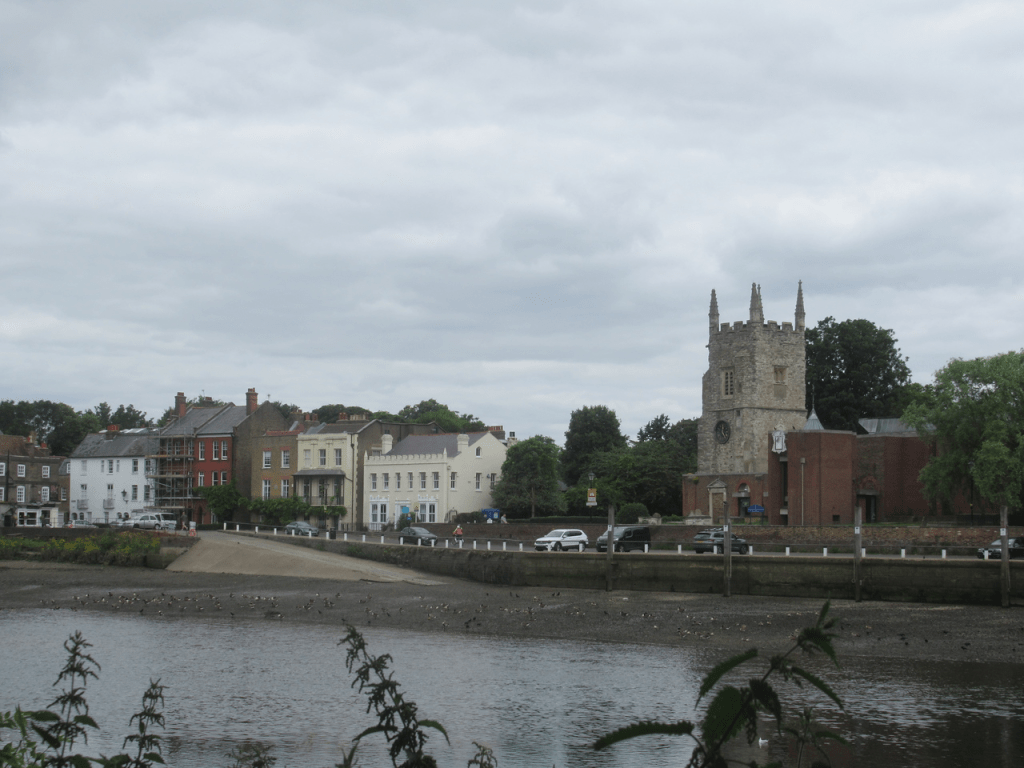
Here’s a sketch of Isleworth, seen from the Richmond side of the Thames.
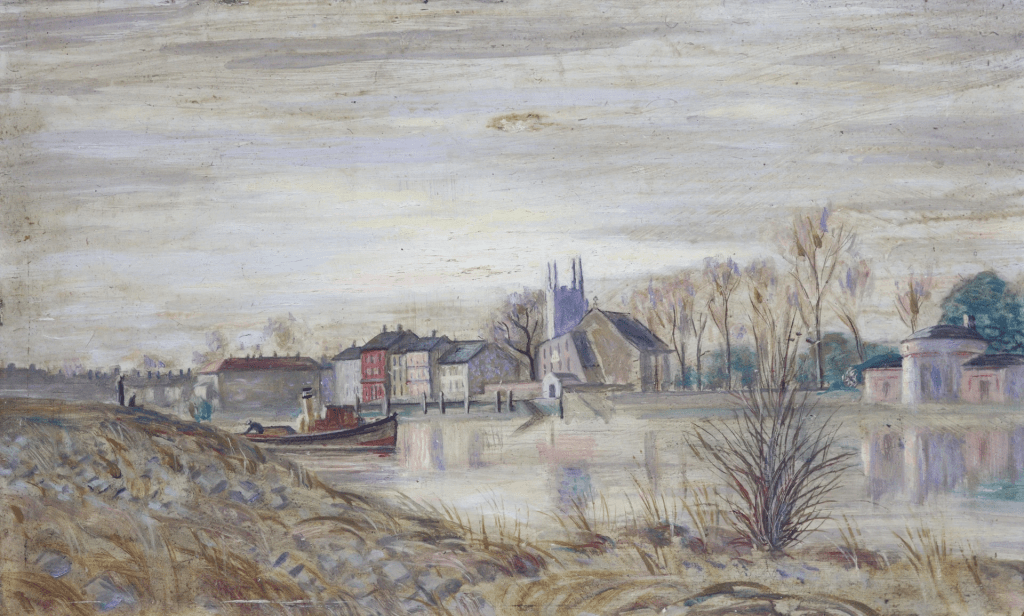
In 2024, very much the same scene looked like this. In 1943 much of All Saints Church, except the tower, was destroyed in a fire started by two naughty boys, who, a few days later, did the same thing to Holy Trinity Hounslow.
In 1946, as you will have seen, he sketched some of the participants in a London chess tournament. Was he commissioned, or did he just submit them for publication in the tournament book?
In 1950 he was proposing that Richmond should become a town of pageantry.
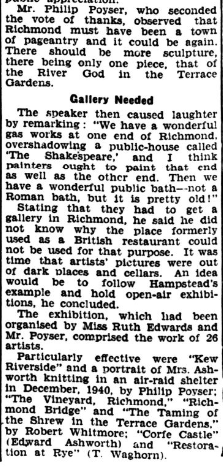
There’s quite a lot of public art in the area now, and Phil would have been aware of the Naked Ladies in Twickenham (installed by the Tata family of Tata Steel fame). He’d also have been delighted that, as I write this, a major Henry Moore retrospective has just opened in Kew Gardens.
Here’s a painting of a canal, quite possibly the Grand Union Canal which leaves the Thames at Brentford, not far from Isleworth, following, at first, the engineered course of the River Brent. Although the style is very different, I thought it had something of an Eric Ravilious vibe about it.
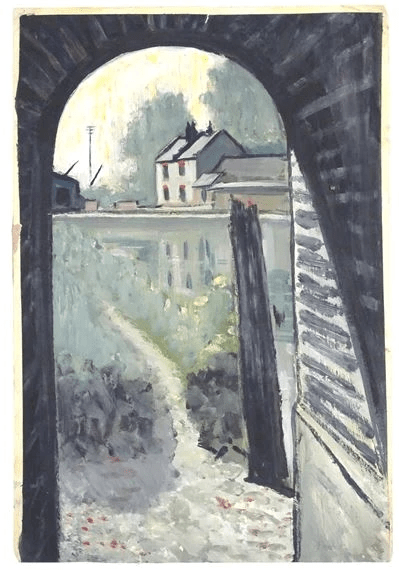
Sold at auction 2021
At the other end of Brentford he’d have found the Q Theatre.
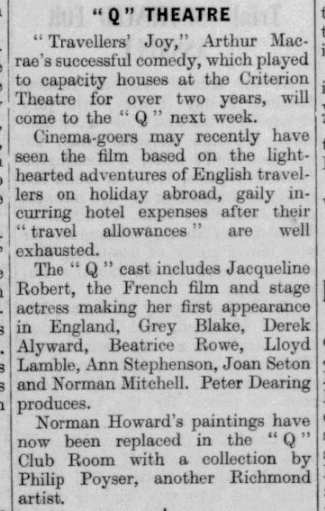
27 July 1951
Later that year Phil was exhibiting in Kensington.
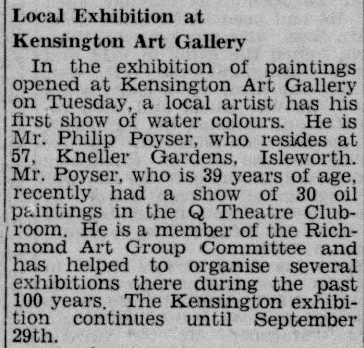
Here’s something very different, with a close-up of a boy who might almost have been a model for Henry Scott Tuke.
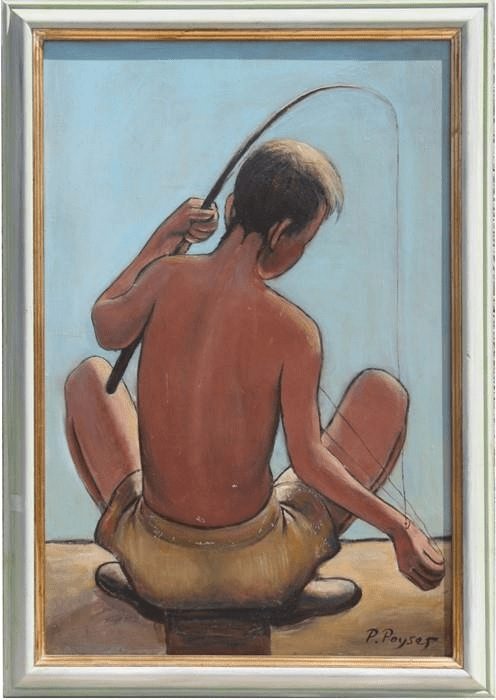
1951 was a busy year, exhibiting here at the very local Hounslow South Community Association.
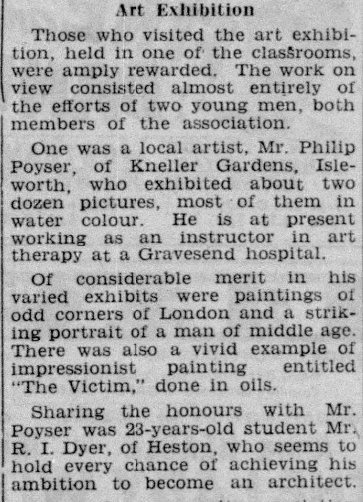
At 39 he wasn’t exactly a young man. In the same paper he explained “The Victim”.
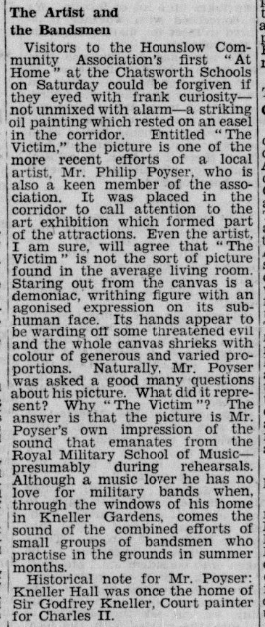
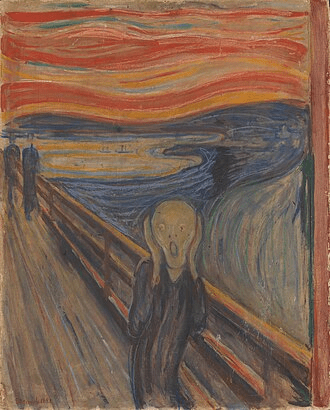
As far as I know, this painting hasn’t survived, but it sounds to me a lot like this:
This drawing was published in an arts and society magazine in 1953.
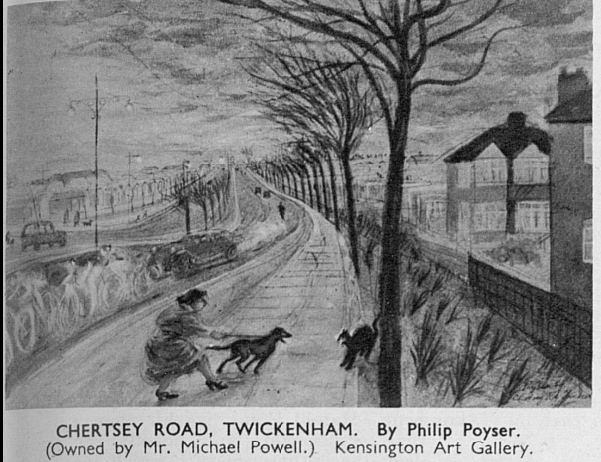
(The houses on the right look like Talma Avenue, where Phil’s future Richmond & Twickenham Chess Club colleague Jock Lee lived. There’s footbridge there now, taking you to the Stoop Memorial Ground, home of Harlequins RFC on the other side of the A316. En passant, I knew Adrian Stoop’s son Michael, who was a friend of Lord Lucan and a regular competitor, for a time, in the Richmond Rapidplays, but that’s another story for another time and place.)
Michael Powell also owned this ‘small but exquisite’ painting which the auction house’s listing compares with Julian Trevelyan and Mary Fedden (great niece of Nelson Fedden, a strong chess player I really ought to write about at some point).
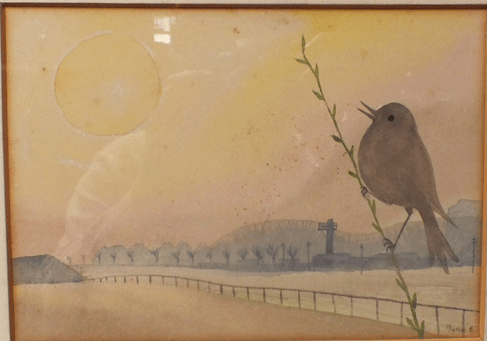
The online biography continues:
Once his studies were completed, Phil became a professional artist using watercolour, ink and oils. While he worked as an art therapist for many years, he also exhibited regularly at galleries across London, such as Leicester, Redfern and others. He also exhibited in Paris and Antwerp several times. He received considerable help to showcase his art from Augustus John, a famous Welsh artist who admired his work. The story is told that Phil even painted for the Queen of England!
… and concludes
He was also commissioned to paint murals in the West Middlesex University Hospital, Isleworth and at a Dartford hospital.
The last exhibition I’ve been able to find is from 1957.
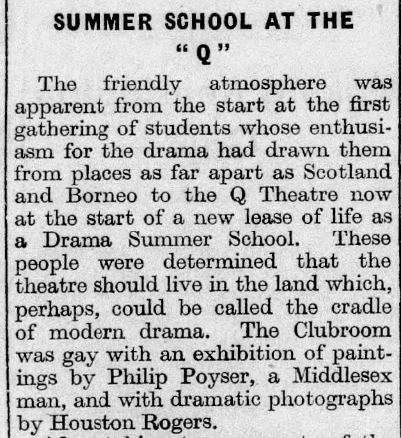
I haven’t found any later references to Phil Poyser’s paintings being exhibited, and most of the paintings dated online seem to be from the early 1950s. It’s possible he stopped exhibiting at this point, concentrating on his work in teaching and art therapy, and also serving as a life model for art students. And living in this house.
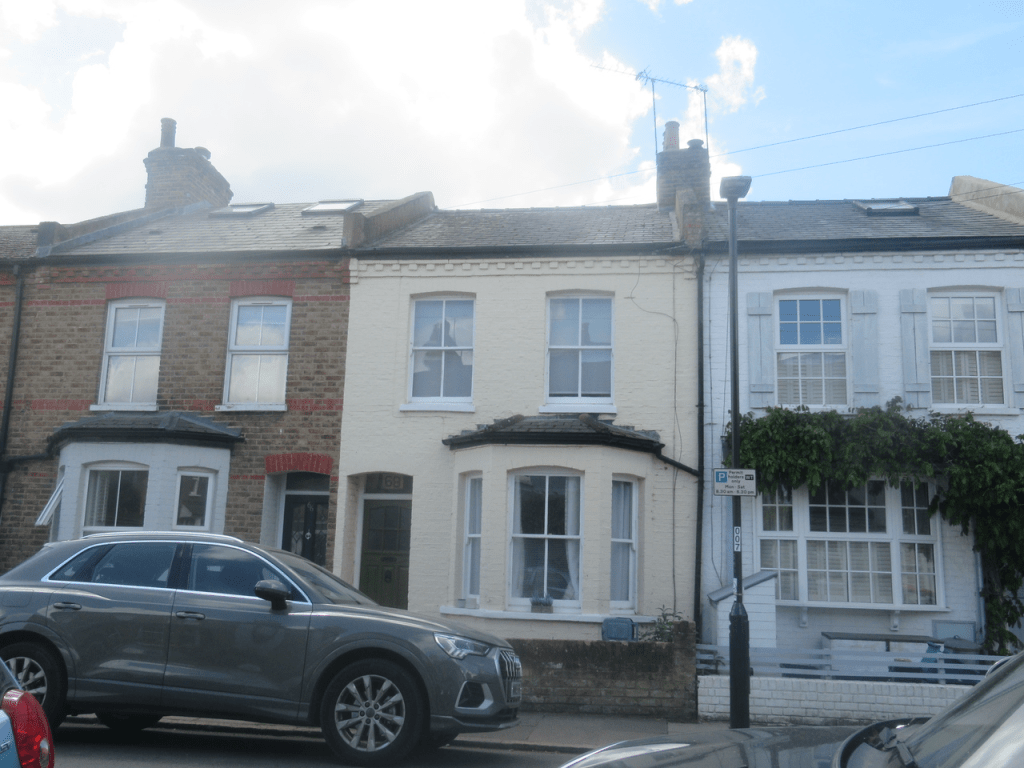
Perhaps it was also then, or a few years later, that he decided to become a competitive chess player, eventually joining Richmond & Twickenham Chess Club.
I wonder if his art therapy included work at Broadmoor, which would explain why he organised matches between their team and his chess club in the early 1970s.
You’ll have to refer back to my previous article for details of his chess career and the remainder of his life.
His paintings still come up for auction occasionally today, although they don’t fetch very large sums. Philip Leighton Poyser was an ambitious and talented artist, who perhaps didn’t quite achieve the recognition he’d hoped for, and a more than competent chess player. His teaching and, in particular, his work in art therapy, would have inspired very many people. But, for those of us lucky enough to have known him, he will be best remembered as a good friend and a lovely man.
Before I go, there are other stories as well. There are always other stories.
I need to tell you about Paul Hasluck. Paul Nooncree Hasluck, Phil’s half uncle (his mother’s half-brother) remained in England, becoming a prolific author of books on handicrafts. Whatever you wanted to make, Paul had a book for you. Watches, of course, but violins, coffins and even roads. Paul N Hasluck was just the man to tell you how to make them. You’ll find just a few of them here, and many more by searching the second-hand book market. He made even Fred Reinfeld look like a slouch.
But he’s not the Paul Hasluck I had in mind. Let’s return to Phil’s Uncle Ethel. (His name sometimes appeared as E’thel so perhaps he pronounced it Eethel, but he also preferred his middle name, Meerna, on occasion.)
Ethel was a deeply religious man, renouncing his Anglican heritage and joining the Salvation Army, where he met Patience Wooler, who had also been born in England. Ethel and Patience married in 1901. Their four children were brought up in what was a strict religious household, and when he gave up his job to work full time for the Salvation Army, running a boys’ home, money was often tight.
The name of their second son honoured the family: Paul after his half-uncle writing books back in England, followed by Meernaa Caedwalla, his father’s middle names. Inheriting his parents’ seriousness of purpose and devotion to community service, he went into politics, a member of the Australian Liberal (centre right) Party, having a particular concern for the rights of indigenous Australians.
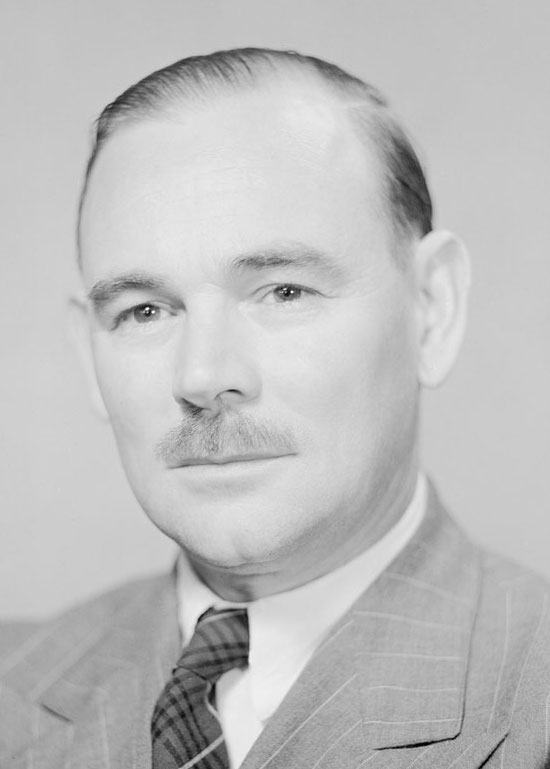
Australian Prime Minister Harold Holt disappeared, presumed drowned, in December 1967, and Paul stood in the subsequent leadership election. He was defeated by John Gorton, being seen by some as too old, too conservative and not sufficiently telegenic.
In 1969, Paul Hasluck was offered the post of Governor General of Australia, which he accepted. It just remains to be said that his father lived long enough to see his son honoured in this way, dying in 1971 at the age of 98. Paul himself died at the age of 87 in 1993. There are several biographies online: Wikipedia here and the Australian Dictionary of Biography here for example.
Our two chess playing artists make an interesting comparison. Jack Redon, was a gentleman artist of independent means living in a large house near Richmond Bridge, but his grandfather died in the workhouse. Phil Poyser, lived a bohemian life a couple of miles away at the other end of town, but his cousin was Governor General of Australia.
Who’d have thought it?
Join me soon for some more Minor Pieces, and perhaps a visit to Broadmoor.
Sources and Acknowledgements
ancestry.co.uk/Poyser and Hasluck family trees
findmypast.co.uk/British Newspaper Library
Wikipedia
Google Maps
Streatham & Brixton Chess and Lost on Time Blogs (Philip Poyser here)
Decendants of Thomas Poyser Facebook Group (Trish Parson) here, Poyser Art Gallery here
Online biographies of Sir Paul Hasluck and Lewis Hasluck


Leave a comment