There are those who are of interest because, like William Ward, they’re strong chess players who had distinguished careers. We can follow their results and study their games.
There are others who might have had shorter or less distinguished chess careers but who are of interest because of their lives outside chess, or perhaps because of their families.
Richard Exton Gardner was one of those. You might have seen this 1902 Surrey Trophy match card before. There, on board 7, was RE Gardner, which tells us he was a decent club standard player.

Richmond wasn’t Gardner’s only club. Here he is, in 1900, playing for West London against Athenaeum, who featured William Ward on top board.

Here he is again, in 1904, playing for West London against an Oxford and Cambridge team. The match below, against City of London, saw both William Ward and George Edward Wainwright in action, with Harold Francis Davidson, later the Rector of Stiffkey (who was eaten by a lion) and star of The (Even More) Chess Addict among the opposition.

But who was Richard Exton Gardner?
If you’ve ever used Yardley soaps or perfumes you might be interested to find out.
The company we now know as Yardley was founded in London by William Cleaver in 1770. His son married a Yardley, and, for obscure financial reasons, the firm acquired the name it still uses today. At some point, probably round about the late 1860s, an ironmonger’s son from Bristol, Thomas Exton Gardner, found employment there, and, clearly ambitious and talented, found himself at the top of the tree.

Here, from an online family tree, is his wife, Elizabeth Ellen (Poncy), whose father, a merchant and trader in embroidery, was originally from Switzerland.
After moving round various addresses first in Central, then in West London, the family settled at Clifton House, Branstone Road, Kew (between the Lion Gate and VIctoria Gate entrances to Kew Gardens and now a listed building). The 1881 census found Thomas and Elizabeth at home, along with their four young children, Ida May, Thornton Ernest, Dora Annie and Richard Exton (born in 1878, and known in the family as Dick). They were wealthy enough to employ a domestic servant and a nursemaid.
Thomas died in 1890 at the age of only 51, after which Yardley fell into decline, but the family were still involved and young Thornton and Richard joined the management team: in 1900 Thornton was Managing Director and Richard, only 21 at the time, Company Secretary.
The 1901 census found Elizabeth and her four children still at the same address, along with their 20 year old cousin Dora Fordham, a housemaid and a cook, both teenage girls. Thornton was described as the manager of a soap factory and Richard a clerk.
So here we young man whose hobby was chess and was already playing for his two local clubs: Richmond and West London. In an age where children rarely played chess, he would have been considered a player of some potential.
It seems, though, that his chess career was short: understandably he decided to put his business interests first: under Thornton and Richard’s stewardship Yardley grew and thrived, and still does so today. If you use their soaps or scents you have them to thank.
Let’s continue Richard’s story, as there’s still much of peripheral interest to relate. In 1905 Yardley opened a new factory in Carpenters Road, Stratford, which runs through what is now the Queen Elizabeth Olympic Park.
In 1908 he married (Gertrude) Vere Uffindell, the daughter of a naval engineer. They both gave their address as 66 Elgin Crescent, Notting Hill, so the family had moved away from Kew. By 1911 Richard and Vere, now expecting their first child, were living on the premises in Carpenters Road along with a servant. A son, Charles Exton Gardner, was born later that year, and another son, named Richard Exton Gardner after his father but known to family and friends as Jimmy, would follow in 1914.
By 1921 the family were living in Leigh on Sea, Essex, and they later moved to Torquay, where Richard died, relatively young, on 14 October 1939.

His probate record reveals that he was a wealthy man. The Bank of England inflation calculator tells me this would be more than £8.5 million today.
Did Charles and Jimmy follow their father’s interest in chess? Not to any great extent, it seems: they took up a different hobby, aviation, which would play an important part in both their lives.
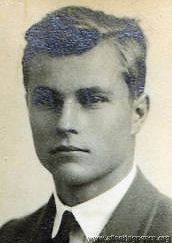
Here’s Charles in 1931, aged 25. Aeronautical engineer ‘with his own aerodrome at home in Surrey’. Always nice to have (Source).
In 1936 Charles won the King’s Cup flying a Percival Vega Gull owned by his younger brother, and the following year he repeated his success, this time in a Percival Mew Gull.

In the summer of 1938 the two brothers made the headlines across the country when Jimmy’s plane was stolen. This report is from the Bucks Herald (12 August 1938).


So they were let off because they were nice middle-class boys? Two-tier justice?
You might want to consider the name of the prosecuting counsel. Vernon Gattie, or Vernon Rodney Montague Gattie QC CBE, as he later became, was the son of Walter Montague Gattie, one of the strongest English chess players of the 1880s, who played for Oxford in five varsity matches. It’s unlikely that Walter knew Richard senior, but they would probably have had some shared acquaintances. The acting chairman, Archibald William Cockburn KC, seems to have been a very distant cousin of Alexander Cockburn, the author of Idle Passion : Chess and the Dance of Death
I expect you want to know what happened next to the miscreants, don’t you?
Gerald, as far as I can tell, worked as an aircraft fitter, never married, and died at the age of 64. Peter, who may have been the instigator of the escapade, and spent a month in hospital recovering from injuries sustained in the crash, was up before the bench again the following year, charged with separate offences of stealing a camera and a raincoat.
He then joined the RAF Volunteer Reserve, rose to the rank of Sergeant in 602 Squadron, and lost his life on 11 December 1942. The 602 Squadron, which flew Spitfires, was based in Scotland but also took part in the Battle of Britain in 1940. Did Peter fly a Spitfire in the Battle of Britain? Seemingly not, as he’s not on any online list of pilots. What were the circumstances of his death? “Details not known” according to the website of the 602 Squadron Museum.
You’ll also want to know what happened to Charles and Jimmy Gardner.
By 1939 Charles was an operational officer in the Air Ministry and presumably served in that post during the Second World War.
Richard Exton Gardner junior (Jimmy) joined the Fleet Air Arm and became a fighter pilot under Douglas Bader, flying Hurricanes in the Battle of Britain. Unlike many of his brave colleagues (some of whom you’ll meet in future Minor Pieces) he survived the war: you can read all about him here.

After the war, both brothers rejoined their family firm, where they remained until retirement, both living until the last years of the 20th century.
Not very much chess in this article, I’m afraid, but still an interesting story. Join me again soon for some more Richmond Chess Club members from the 1900s.
Acknowledgements:
ancestry.co.uk
findmypast.co.uk
EdoChess
Wikipedia
Other websites linked in the article


 Minor Pieces
Leave a reply to Minor Pieces 47: George Archer Hooke (2) – Minor Pieces Cancel reply