There are a few chess players who, while not being outstanding exponents themselves, achieved immortality through a flash of inspiration. Saavedra is one example, and another is the subject of this article: Oliver Harcourt Labone.

You might have seen something like this before, either this position or a similar position published by Lasker ten years later. I’m sure you don’t need me to tell you the answer. (Spoiler: it involves an underpromotion.)
Problemist Steven Dowd posted this on the BCN Facebook page, asking for more information about Labone.
There’s a lot to tell about a man who lived an eventful life, so do come along for the ride. It’s a rather extraordinary story.
Let’s take you back to the Central Criminal Court on 20 August 1861. A solicitor named Richard Austwick Westbrook was accused of manslaughter. He was a divorcee boarding with a lady named Jane/Janette Cathrey, whose husband was had emigrated to Australia: both Richard and Jane, who were probably having an affair, had a reputation for being hot-headed and violent. During an argument Richard threw a knife across the table, hitting Jane in the abdomen and causing her death. A hearing in a magistrates’ court earlier in the month had found him guilty of manslaughter, but now the prosecution offered no evidence, believing it was an accident, and Richard walked free. Sounds like a combination of toxic masculinity and male privilege to me. Perhaps it affected his business, though, as he was declared bankrupt two years later.
Richard Austwick Westbrook had been born in Reading in 1815. In 1841 he married Hannah Grant Stiles. They had four children, but she died in 1852, and in 1855 he married Anne Topley at St Paul’s Church, Hammersmith. In 1857, a son, Rowland Martin Westbrook, was born, followed in 1858 by Oliver Harcourt Westbrook. It seems they split up shortly after Oliver’s birth and he went to live with Jane Cathrey. His petition for divorce was granted in 1860, naming a man called Demetrio as co-respondent. In 1862 he married a third time and had two more children.
Meanwhile, there was a Clement Leslie Dalba born in Brentford in 1860 (mother’s maiden name Mesina). There’s no other record of him, or of anyone else in the area with any of those names, so my best guess is he was the Clement Claude Leslie Labone we’ll meet later. The name Demetrio, along with Dalba and Mesina, suggests an Italian connection, so I suspect he was the son of Nicholas Demetrio and Anne Topley, and his birth had been registered using false names.
At some point in late 1860 or early 1861, Nicholas, Anne and the three boys moved to Glasgow, happy to escape Richard’s hot temper, and, to avoid detection, changed their name to Labone. Rowland’s middle name was also changed, from Martin to MacDonald: you can’t get much more Scottish than that. She also seems to have changed her maiden name from Topley to Copley, and sometimes added Mary in front of Anne.
In the 1861 Scottish census he’s Nicholas Labone, aged 28, living in a boarding house in Glasgow, but described as a Landed Proprietor. In 1862, a daughter, Flora Adelina, was born to Nicholas and Anne. Nicholas set up in business as a Professor of Languages, teaching French, German and Italian, but, just like Richard, ran into financial problems and, in 1863, was declared bankrupt. In 1865, a son, Gregory, was born, but sadly died the same year. In 1866 Nick’s publishers were trying desperately to unload 155 copies of his book A French Verbary.
In 1871 Oliver is away at school, but we find Nicholas, a Professor of Languages, living with his wife Annie M Labone, and two other sons, Rowland M (15) and Leslie C (12). Flora doesn’t seem to be around. Flora would later marry and have a family. Rowland died in his 40s, never apparently marrying or having a job, which suggests some sort of health problem. All I can find out about him is that in 1876 he was looking for a job as a lay evangelist. We’ll return to Clement/Leslie later.
Nicholas Labone/Demetrio, when he wasn’t teaching languages and writing books, was, it turns out, a chess player. He was very much involved with the Glasgow Chess Club in the early 1870s, both as a player and an administrator. He must have taught the game to Oliver and Clement. Nicholas and Anne’s marriage doesn’t seem to last. They both move down to Lancashire. Nicholas, now known as Nicholas Demetrio again, remarried in Barrow-in-Furness in 1882. There’s also a Demetrio who played in chess matches between Manchester and Liverpool in the early 1880s, who, I assume, was Nicholas. According to a rate book from 1890, he was still in Manchester, living in poverty. In 1891, Annie, claiming to be a widow born in Derby, was living with Rowland in Liverpool.
For the moment, though, we need to follow Ollie. We next pick him up in 1879, now living in Liverpool, where a public notice informs us that he’s no longer working for John Gibbs & Son, Ironfounders and Export Agents. At some point after Nick’s death the family seems to have moved from Glasgow to Liverpool. By 1881, he’s in Manchester, where he married Emily Etchells, the daughter of a Methodist preacher, and at the time of the census the young couple have just set up home together in Salford. Ollie is now described as a Commercial Traveller.
In 1883 he first makes his mark in the chess world, submitting a problem to the Illustrated London News. In 1884 he’s playing for Manchester, and, the following year in Stourbridge, Worcestershire. Over the next few years he’s active in Birmingham and Liverpool, along with half-brother Clem. In 1886 the position that would send his name around the world was published: quite an achievement for the young man.
Here’s a game from 1886. Copy the pdf here if you want to play through any game in this article.
[Event “Liverpool Chess Club”]
[Date “1886.08.20”]
[White “Wellington, Samuel”]
[Black “Labone, Oliver Harcourt”]
[Result “0-1”]
1. e4 e5 2. Nf3 Nc6 3. Bc4 Nf6 4. Ng5 d5 5. exd5 Na5 6. Bb5+ c6 7. dxc6 bxc6 8. Be2 h6 9. Nf3 e4 10. Ne5 Qd4 11. f4 Bc5 12. Rf1 Qd8 13. c3 Nd5 14. Qa4 Qh4+ 15. Kd1 O-O 16. Qxa5 Bb6 17. Qa4 Rd8 18. d4 exd3 19. Bf3 d2 20. Bxd5 dxc1=Q+ 21. Kxc1 Be3+ 22. Kc2 Rxd5 23. Qxc6 Bf5+ 24. Kb3 Rb8+ 25. Ka4 Qd8 26. b4 Rxe5 27. Kb3 Rc5 28. Qf3 Qd3 29. Qd1 Rxc3+ 30. Nxc3 Be6+ 31. Kb2 Rxb4+ 32. Qb3 Bxb3 33. axb3 Qd2+ 34. Ka3 Qxc3 35. Rab1 Bd4 36. Rfc1 Rxb3+ 37. Rxb3 Qa5# 0-1
And Problem 1, a mate in 3 from The Field 1 Jan 1887:

(Solutions to problems are at the end of the article)
Two games from 1888:
[Event “Liverpool North End v Imperial”]
[Date “1888.01.??”]
[White “Whitby, L E”]
[Black “Labone, Oliver Harcourt”]
[Result “0-1”]
1. e4 e5 2. Nf3 Nc6 3. Bb5 Nf6 4. Qe2 d6 5. c3 Bg4 6. O-O Be7 7. d3 O-O 8. Be3 Nd7 9. d4 exd4 10. cxd4 f5 11. Bxc6 bxc6 12. Qc4+ d5 13. exd5 Nb6 14. Qb3 Bxf3 15. gxf3 cxd5 16. Nc3 f4 17. Bd2 Nc4 18. Qc2 Rb8 19. b3 Nxd2 20. Qxd2 Bb4 21. Qd3 Rb6 22. Kh1 Bxc3 23. Qxc3 Qh4 24. Rg1 Qxf2 25. Rg2 Qe3 26. Qxc7 Qxd4 27. Rag1 g6 28. Qc2 Qf6 29. Rd2 Qf5 30. Qxf5 Rxf5 31. Rgd1 Rd6 32. Kg2 Kf7 33. Re1 Kf6 34. Re8 d4 35. Rd3 Re5 36. Rxe5 Kxe5 37. Kf1 g5 38. Kg1 Rc6 39. Rd2 Rc3 40. Kf2 d3 41. b4 Kd4 42. a4 Rc2 43. Ke1 Ke3 0-1
I can find no adult male with a name anything like L E Whitby anywhere near Liverpool in 1888 or anywhere else any other time, yet he is often mentioned in chess columns. Can anyone help?
[Event “Liverpool North End v Southport”]
[Date “1888.02.04”]
[White “Blumberg, Henry”]
[Black “Labone, Oliver Harcourt”]
[Result “0-1”]
1. e4 e5 2. Nf3 Nc6 3. Bb5 Nf6 4. O-O Nxe4 5. d3 Nf6 6. Bxc6 dxc6 7. Nxe5 Bd6 8. f4 O-O 9. h3 Bxe5 10. fxe5 Qd4+ 11. Kh1 Qxe5 12. Nc3 Nd5 13. d4 Qe7 14. Nxd5 cxd5 15. Qh5 f5 16. Bg5 Qb4 17. c3 Qxb2 18. Rae1 Qxc3 19. Re7 Qxd4 20. Rf4 Qb6 21. Qf3 Be6 22. Rh4 Qb1+ 23. Kh2 Bf7 24. Qg3 Qb6 25. Rh6 Bg6 26. Qe5 Rf7 27. Re6 Qb5 28. Be3 Qd7 29. Bd4 c6 30. h4 Qc7 31. Rd6 Re7 32. Qg3 Rf8 33. Be5 Rxe5 34. Qxe5 Re8 35. Qg3 f4 36. Qxf4 Re6 37. Rxg6 hxg6 0-1
The 1891 census tells us that, now a commission agent, he’s moved to Wolverhampton, along with Emily and their children Walter, Leonard and Marie. Another son, Oliver Martyn, had died at the age of only 4 months the previous year.

But in 1893 the family’s world was turned upside down. Oliver was up before the law, accused of embezzlement from his business partner, one Enoch Howard, found guilty and sentenced to a month’s hard labour.
Undaunted, though, the following year he took up a new hobby: giving simultaneous displays against weaker clubs. Over the next 20 years or so he travelled the country, possibly connected with his job as a travelling salesman in machine oils, giving simuls wherever he went and gaining a national reputation as an expert simul giver. In 1894 it was Northampton, in 1896 it was Norwich.
He spent much of 1896 playing a match for the Staffordshire Championship with the Reverend John H Robison of Walsall, which he won easily, winning 10 games and drawing 2. In 1898 he faced a more formidable opponent for the county title: Charles William Draycott. Oliver only managed one draw from the first three games, but eventually scored 10 wins and 3 draws to his opponent’s 7 wins.
Here’s the final game of the match:
[Event “Staffordshire Championship”]
[Date “1898.??.??”]
[White “Draycott, Charles William”]
[Black “Labone, Oliver Harcourt”]
[Result “0-1”]
1. e4 e5 2. Nf3 Nc6 3. Bc4 Nf6 4. O-O Bc5 5. c3 Nxe4 6. d4 d5 7. Bb5 exd4 8. cxd4 Bd6 9. Nc3 Nxc3 10. bxc3 O-O 11. Qc2 Ne7 12. Bd3 f5 13. Bg5 c6 14. Rfe1 Qc7 15. Ne5 Bxe5 16. Rxe5 Ng6 17. Re2 h6 18. Bd2 Bd7 19. Rae1 b5 20. a3 Rf6 21. g3 Raf8 22. Bc1 R8f7 23. Kh1 c5 24. Qb1 Qb6 25. Be3 c4 26. Bc2 Rf8 27. Bd2 f4 28. Bxg6 Rxg6 29. Bxf4 Bf5 30. Qc1 Be4+ 31. Kg1 Qf6 32. Rxe4 dxe4 33. Rxe4 Qf5 34. Qe3 Kh7 35. Be5 Ra6 36. g4 Qg6 37. h4 Rxa3 38. h5 Qc6 39. f3 0-1
Against Lasker (it’s not clear at the moment whether this was a casual game or a simul, and exactly where it took place), he played an unambitious opening and a passive middlegame.
[Event “Casual game”]
[Date “1898.12.02”]
[White “Labone, Oliver Harcourt”]
[Black “Lasker, Emanuel”]
[Result “0-1”]
[ECO “C80”]
[PlyCount “88”]
[Beauty “7358352750601”]
[GameId “416744678835”]
[EventDate “1898.??.??”]
[SourceVersionDate “2020.10.20”]
1. e4 e5 2. Nf3 Nc6 3. Bb5 a6 4. Ba4 Nf6 5. O-O Nxe4 6. Re1 Nc5 7. Nxe5 Nxe5 8. Rxe5+ Be7 9. Nc3 O-O 10. d4 Nxa4 11. Nxa4 d6 12. Re1 Qd7 13. Nc3 Bf6 14. Be3 Qf5 15. Ne2 Bd7 16. Ng3 Qg6 17. h3 Bh4 18. Kh2 f5 19. Bf4 Qf7 20. Qd2 h6 21. Nf1 Bf6 22. Bg3 g5 23. f4 Kh7 24. Rac1 Bc6 25. c4 Be4 26. Re2 Qh5 27. Rf2 Rg8 28. Kg1 Rg7 29. c5 d5 30. Rc3 Rag8 31. Bh2 Qg6 32. Rg3 h5 33. h4 g4 34. Rb3 Bxh4 35. g3 Bf6 36. Rxb7 Re7 37. Qc3 Qg7 38. Rd2 Rge8 39. Ne3 Kg6 40. Nc2 Bf3 41. Rb4 Re2 42. Rxe2 Rxe2 43. Ne1 Qe7 44. Nxf3 Rg2+ 0-1
In 1901, still a commission agent, but working on his own account, he was living at Ivy Side, Rookery Road, Handsworth, West Bromwich with Emily, Leonard and Marie, Walter having left home. He was playing a lot of chess, but not playing Happy Families. There were clearly domestic problems of some sort, and, just a few months later, Emily and Marie set sail for New Zealand, as far away as possible from poor Oliver. Marie, would die a few years later, but Walter and Leonard would later join her with their families. She later married again, perhaps to a younger man she met on board ship, but there’s no evidence that she and Oliver were divorced.
Meanwhile, Oliver had found himself another woman, in fact another Emily, Emily Yates. (Every one was an Emily, ‘e wouldn’t ‘ave a Lily or a Pam.) She had been born in 1877 in Heywood, Lancashire, so perhaps they’d met on one of his visits to Manchester or Liverpool. Perhaps Emily Mark 1 had had enough of his constant travelling, or of his chess addiction. Or perhaps it’s just one of the oldest stories around: a middle-aged man is attracted to a younger woman. A son, Cyril, was born in Norwich in 1903, and another son, Douglas, in Leicester in 1905.
Here’s Problem 2: Mate in 3 from the Illustrated London News 15 Dec 1906.

A game from this period, from the Staffordshire Sentinel (27-07-1907):
[Event “Unknown”]
[Date “1907.??.??”]
[White “Labone, Oliver Harcourt”]
[Black “Davies, A E”]
[Result “1-0”]
1. e4 d5 2. exd5 Qxd5 3. d4 e5 4. Nf3 exd4 5. Nxd4 c5 6. Qe2+ Be7 7. Nb5 Na6 8. N1c3 Qe6 9. Be3 Nf6 10. Qf3 O-O 11. Bd3 c4 12. Nd4 Qb6 13. Nf5 Qxb2 14. Nxe7+ Kh8 15. Bd4 cxd3 16. Qxf6 Rg8 17. Qxf7 Be6 18. Qxe6 Qxa1+ 19. Kd2 Qxh1 20. Ng6+ hxg6 21. Qh3# 1-0
Yes, we seem to have found ourselves back in Leicester again, and, of course, Oliver soon threw himself into the chess life of the city, playing in matches and giving simuls, but also visiting Liverpool in 1909 to take part in a blindfold simul against Blackburne. In 1911 his family are in New Bridge Street, not very far from what was then Filbert Street but is now the nearby King Power Stadium. He’s a Commercial Traveller in Oils, while Emily Yates is a Housekeeper. (This was a common euphemism in census returns, but sometimes employers did have affairs with their housekeepers. Ten years later, for example, South Warwickshire farmer Thomas Woolley had an affair with his housekeeper while his wife was in the lunatic asylum. Pretty despicable, you might think, but if he hadn’t done so, you wouldn’t be reading this article today.)
Here’s the Blackburne game, which doesn’t make a very good impression. He misplayed the opening and never stood a chance. You get the impression he was a strong attacking player, but when facing top level opposition he curled up into a ball and defended weakly. As it happens, one of his (possible) relations was a much better defender.
[Event “Blindfold Simul, Liverpool”]
[Date “1909.??.??”]
[White “Blackburne, Joseph Henry”]
[Black “Labone, Oliver Harcourt”]
[Result “1-0”]
1. e4 e6 2. d4 d5 3. Nc3 Nf6 4. exd5 exd5 5. Bd3 Bd6 6. Nf3 a6 7. O-O Be6 8. Ne2 O-O 9. Ng3 Re8 10. Bg5 Nbd7 11. Re1 Nf8 12. Ne5 Ng6 13. f4 Bc8 14. Qf3 h6 15. Bxf6 Qxf6 16. Nh5 Qd8 17. Nxg6 fxg6 18. Bxg6 Rxe1+ 19. Rxe1 Be7 20. f5 Qd6 21. Qe3 Bf8 22. Qe8 b5 23. Qf7+ Kh8 24. Re8 1-0
A game from his time in Leicester:
[Event “Warwickshire v Leicestershire”]
[Date “1911.??.??”]
[White “Burgoyne, Frederick John”]
[Black “Labone, Oliver Harcourt”]
[Result “0-1”]
1. e4 d5 2. exd5 Qxd5 3. Nf3 Nf6 4. Nc3 Qa5 5. d4 c6 6. Bd3 Bg4 7. O-O e6 8. h3 Bh5 9. a3 Be7 10. Bf4 Nbd7 11. Ne4 O-O 12. Ned2 Qd8 13. c4 c5 14. Qb3 cxd4 15. Ne5 Nc5 16. Qc2 Bd6 17. Rae1 Qc7 18. g4 Bg6 19. Bxg6 hxg6 20. b4 Ncd7 21. Ndf3 Nxe5 22. Nxe5 Nd5 23. Bg3 f6 24. Qxg6 Ne7 25. Qh5 fxe5 26. c5 Bxc5 27. bxc5 Qxc5 28. Rxe5 Qxa3 29. Rxe6 Rad8 30. Qg5 Nc6 31. h4 Qf3 32. h5 Rd5 33. Qg6 d3 34. h6 Qf7 35. Bd6 Qxg6 36. Rxg6 Rf7 37. f4 d2 38. Rd1 Rd7 39. Bf8 Kh7 40. hxg7 Kg8 41. Rh6 Rxg7 42. Bxg7 Kxg7 43. Rh2 Nd4 44. Rf2 a5 45. Kf1 Nb3 46. Ke2 a4 47. Ke3 a3 48. Ke4 Rd4+ 49. Ke3 a2 50. Rff1 Ra4 51. Ke2 Nc1+ 0-1
It wasn’t long before he was on the move again. By 1913 he was in Blackpool, where his sons would be baptised the following year.
Problem 3, another mate in 3, was published in the Illustrated London News on 9 October 1915.
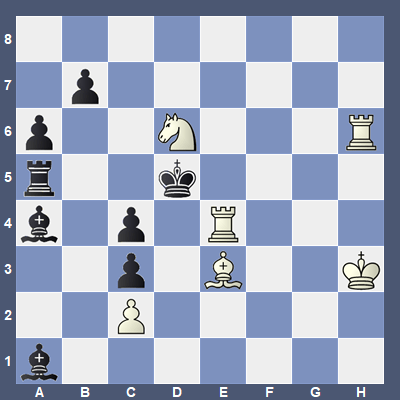
While his family settled down by the Lancashire coast, he was back on the road, spending some time in Devon and Cornwall, and, of course, giving simuls. He was back in Exeter in 1918, where he played Plymouth champion Thomas Taylor.
[Event “Devon County CA: Exeter”]
[Date “1918.10.05”]
[White “Labone, Oliver Harcourt”]
[Black “Taylor, Thomas”]
[Result “1-0”]
1. e4 e5 2. Nc3 Nf6 3. f4 d5 4. fxe5 Nxe4 5. Nf3 f5 6. d3 Nxc3 7. bxc3 Nc6 8. d4 Be7 9. Bd3 O-O 10. O-O Be6 11. Qe1 Nb8 12. Qg3 c5 13. Bh6 Rf7 14. dxc5 Bxc5+ 15. Kh1 Be7 16. Nd4 Qd7 17. Bxf5 Bxf5 18. Rxf5 Bh4 19. Qxh4 Rxf5 20. e6 Qa4 21. Qg3 g6 22. Nxf5 Nc6 23. Qc7 1-0
In February 1920 he was writing to the Illustrated London News from Belfast, and, a few months later, he was in Barrow-in-Furness: this game was published there on 10 July.
[Event “Barrow-in-Furness”]
[Date “1920.??.??”]
[White “Paterson”]
[Black “Labone, Oliver Harcourt”]
[Result “0-1”]
1. e4 d5 2. exd5 Qxd5 3. Nc3 Qa5 4. d4 c6 5. Bd2 Qc7 6. Bc4 Nf6 7. Nf3 Bg4 8. h3 Bh5 9. g4 Bg6 10. Ne5 e6 11. Bf4 Bd6 12. Qe2 Nbd7 13. Bxe6 Bxe5 14. Bxd7+ Qxd7 15. Qxe5+ Qe7 16. O-O-O Qxe5 17. Bxe5 O-O 18. Bxf6 gxf6 19. f4 f5 20. Rde1 Rfe8 21. Re5 f6 22. Rc5 fxg4 23. hxg4 Rac8 24. Ra5 a6 25. Kd2 Rcd8 26. Ne2 Bxc2 27. g5 Be4 28. Rh3 f5 29. Re5 Rxe5 30. fxe5 c5 31. Ke3 b6 32. Rh6 Bb1 33. Rxb6 cxd4+ 34. Nxd4 f4+ 35. Kxf4 Rxd4+ 0-1 Black won about 20 moves later.
The 1921 census found the family in Blackpool: Oliver described himself as a commercial traveller, while Cyril had no fixed employment and Douglas was a page boy at the Hotel Metropole.
Problem 4, mate in 3 Illustrated London News 17 Sep 1921:

In 1925 he was still submitting problems and games for publication in the Illustrated London News.
Problem 5, mate in 3 Illustrated London News 9 May 1925
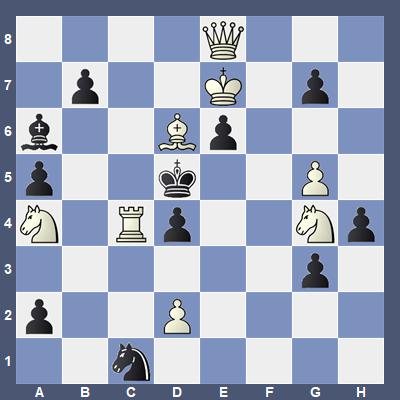
We also have a game from 1925:
[Event “Blackpool Central v Preston”]
[Date “1925.??.??”]
[White “Labone, Oliver Harcourt”]
[Black “Marsden, Thomas”]
[Result “1-0”]
1. e4 e6 2. d4 d5 3. Nc3 Nf6 4. e5 Nfd7 5. Nf3 c5 6. Be2 cxd4 7. Qxd4 Bc5 8. Qg4 g6 9. O-O Nc6 10. Qg3 Qc7 11. Bf4 Nd4 12. Bd3 Nxf3+ 13. Qxf3 Nxe5 14. Qg3 Bd6 15. Rae1 Nf3+ 16. Qxf3 Bxf4 17. Nxd5 Bxh2+ 18. Kh1 Qd6 19. Nf6+ Kf8 20. g3 Bxg3 21. fxg3 Qd8 22. Be4 Rb8 23. Qf4 Ra8 24. Qh6+ Ke7 25. Qh4 Kf8 26. Rd1 Qc7 27. Qh6+ Ke7 28. Bxg6 Bd7 29. Be4 Bc6 30. Qg7 Bxe4+ 31. Nxe4 1-0
Perhaps he just had time to see this game in print before, beset by financial problems, he decided to take his own life.

His son Cyril would also have an unhappy life, and by 1939 was in a mental hospital, described as a pianist. He died in 1947 at the age of 43.
So that was the sad end of Oliver Harcourt Labone, chess addict, player, problemist and simul giver, indefatigable writer to chess columnists. He must have been a troubled man throughout his life. Did his passion for chess help him through his darkest days, or was it one of the causes of his problems, not leaving him enough time for his work and family? It seems like several members of his family were beset by mental health problems, so my guess would be the former.
Oliver Harcourt (Westbrook) Labone, this was your life, or at least part of it.
But it’s not the end of our story. Let’s return to Oliver’s probable half-brother Clement Claude Leslie/Clement Leslie/Leslie Clement, who, as we’ve seen, was also a chess player, but at a lower level. He had a much less eventful life, in spite of job changes. He was a schoolmaster in 1891, a book-keeper in 1901 and a mercantile clerk (which might, I suppose, involve book-keeping) in 1911. He was active as a club player between 1885 and 1894, annotating a consultation game in 1891. After that, I suppose, family life and work took over. He remained in Liverpool all his life, living in West Derby in 1891 and 1901, and in Everton in 1911. If you were following football in the 1960s the names Labone and Everton will be inextricably linked. Any connection?
Clement married Fanny Price and had four children, the oldest of whom, born in 1887, was also named Clement Claude Leslie Labone, and, by 1921 had become a Restaurant Proprietor in Liverpool (he was still in the same job in 1939). He married Edith Birch and had three sons, the middle one of whom was named Arthur Leslie Labone. Arthur, in 1939 a Lead Merchant’s Travelling Agent (sounding not unlike great uncle Oliver) married an Irish girl named Bridget (Patricia) Rice. Their son was indeed Brian Leslie Labone (1940-2006), the Everton and England footballer, who, unlike his great great uncle, excelled at defending. He wasn’t the only footballer in the family: his uncle Harold played as a centre forward for Aston Villa.
There’s more yet. When I posted about the connection between Ollie and Brian on Twitter, my good friend John Foley replied that he was also related to Brian Labone (verified by DNA), whose mother’s maiden name was Foley. So Brian Labone, assuming Clement senior and Oliver were indeed blood relations, was related to chess players on both sides of his family.
It’s a small world, as you’ll find out when we return to Twickenham for future Minor Pieces. But first, there’s more to discover about Oliver’s family.
Solutions to problems:
Problem 1:
1. Qh4 Kc5 (1… Ng3 2. d4 c5 3. Qd8#) (1… Kxe5 2. d4+ Kd6 3. Qd8#) ( 1… d4 2. Nxc6 d3 (2… e5 3. Qe7#) (2… Kc5 3. Qxd4#) 3. Qd4#) 2. Qb4+ Kxb4 3. d4#
Problem 2:
1. Nd6 Kxd6 (1… Bxc7 2. Qe3+ Kxd6 3. Qe5#) (1… Kd4 2. Qf2+ Kc3 3.
Qb2#) (1… Kb6 2. Qa5+ Kxa5 3. Nc4#) 2. Qa5 Bxc7 (2… c5 3. Qb6#) 3. Qe5#
Problem 3:
1. Nb5 (1. Rhe6 Bd7) 1… Kxe4 (1… Bxb5 2. Rhe6 Bc6 3. R4e5#) (1…
Rxb5 2. Rhe6 Rb1 3. R4e5#) (1… Bxc2 2. Rhe6 Bxe4 3. Nc7#) (1… Bb3 2. Rhe6 Bxc2 3. R4e5#) (1… axb5 2. Rhe6 b4 3. R4e5#) 2. Re6+ Kf3 3. Nd4# 1-0
Problem 4:
1. Rh6 Bc6 (1… b5 2. c8=Q b4 (2… Nc6 3. Qg8#) 3. Qc4#) (1… Nc6 2.
c8=Q Ne5 (2… Nd4 3. Qc4#) (2… b5 3. Qg8#) 3. Rd4#) (1… Rc5 2. Rd4+ Ke5 (2… Kc6 3. c8=R#) 3. Nf7#) (1… Rb5 2. Rd4+ Kc5 3. Ne4#) (1… Bb5 2. Rd4+ Kc5 3. Ne4#) 2. c8=N Bxb7 3. Ne7# 1-0
Problem 5:
1. Qh5 {Threats: 2. Ne5 and 3. Qf3#, 2. Ne3+ dxe3 3. Nb6#} Kxc4 (1…
Bxc4 2. Nf6+ gxf6 (2… Kc6 3. Qf3+) 3. Qf3#) (1… Ke4 2. Ne5 g2 (2… Kf4 3. Qg4#) 3. Qf3#) (1… g2 2. Ne3+ (2. Rc5+ Ke4 3. Nf2#) 2… dxe3 3. Nb6#) (1… e5 2. Qf7+ (2. Nxe5 g2 3. Qf3#) 2… Ke4 3. Nc5#) 2. Ne5+ Kb5 (2… Kb3 3. Qd1#) (2… Kd5 3. Qf3#) 3. Qe8# 1-0


 Minor Pieces
Leave a comment