40 years ago, as I write this, I received a phone call that was to change my life. My friend Mike Fox had been commissioned to write a book about chess trivia and asked if I would like to co-author it.
The first and longest chapter of The Complete Chess Addict, as it would become, was about people famous in other spheres who also played chess, grouped by occupation.
Mike had been delighted to discover that two of the most colourful characters in English social history in the first half of the last century had both been Varsity chess players in their youth.
Aleister Crowley, ‘the wickedest man in the world’, had played for Cambridge in 1896 and 1897, while Harold Davidson, ‘the rector who was eaten by a lion’ (he was actually mauled rather than eaten, but that’s jumping ahead), represented Oxford between 1901 and 1903.
He wrote the sections on Crowley and Davidson, which he pitched to Faber & Faber as a sample extract. They liked the idea, as did our chess playing friends we showed them to.
In one sense, the Minor Pieces project might be seen as a 21st century counterpart of Chapter 1 of The (Even More) Complete Chess Addict. I’m a very different person to Mike, and we live in very different times, so, inevitably, it differs in many ways.
But there seemed to be no better way to celebrate the 100th Minor Piece than to investigate Aleister Crowley’s chess career. There’s a lot to tell, so he will also start the second century before making way for Davidson.
Edward Alexander Crowley was born in Leamington Spa in 12 October 1875, the only surviving child (a younger daughter died in infancy) of 46 year old Edward Crowley and 27 year old Emily Bertha Bishop (yes, his mother was a chess piece). His wealthy parents were members of the Exclusive Brethren, a fundamentalist evangelical Christian sect, although his father’s family had originally been Quakers.
When he was about 6 or 7, the family moved to Redhill, in Surrey, where he was introduced to chess by a visitor. As he related in his Confessions:
The boy’s intellect was amazingly precocious. It must have been very shortly after the move to Redhill that a tailor named Hemming came from London to make new clothes for his father. Being a “brother”, he was a guest in the house. He offered to teach Alick chess and succeeded only too well, for he lost every game after the first. The boy recalls the method perfectly. It was to catch a developed bishop by attacking it with pawns. (He actually invented the Tarrasch Trap in the Ruy Lopez before he ever read a book on chess.) This wrung from his bewildered teacher the exclamation, “Very judicious with his pawns is your son, Mrs. Crowley!”
Young Alick, as he was known in the family, idealised his father, who died of tongue cancer when he was only 11, but had a difficult relationship with his mother. After his father’s death he developed behaviour problems, for which he was harshly punished at school. He tried several other schools, but, a free-spirited, imaginative and traumatised boy, hated them all.
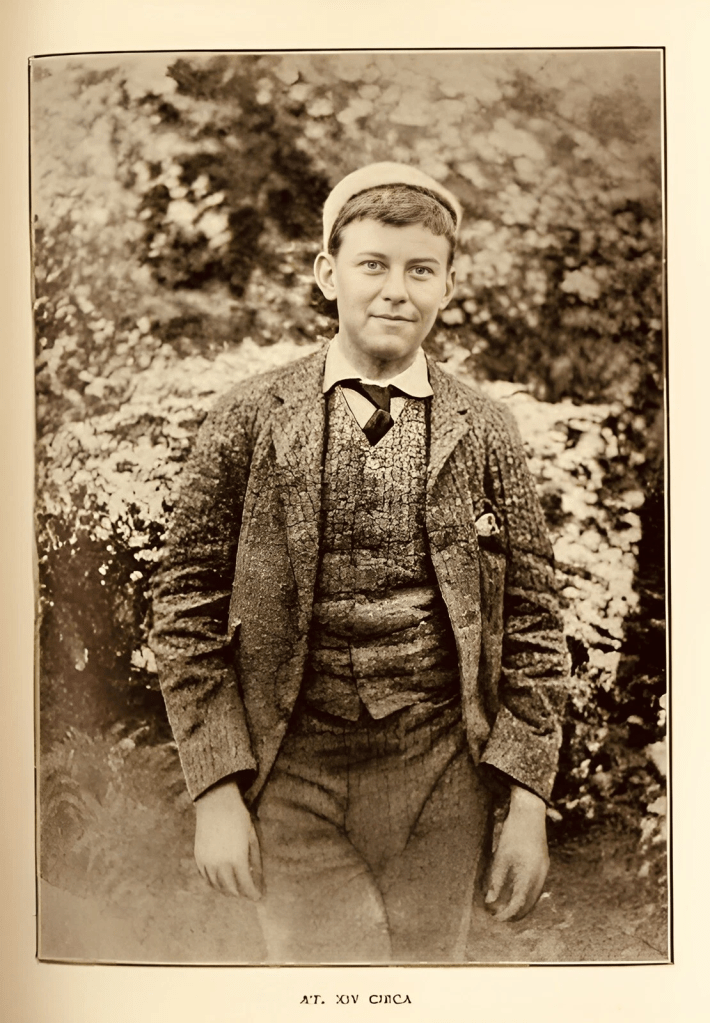
Here he is, at the age of about 14.
Questioning his parents’ religious teachings, and taking up smoking and sex, he was sent to live with a Brethren tutor in Eastbourne. There, a troubled young man with an addictive personality, he discovered other, healthier obsessions: climbing and, remembering his experiences from a decade earlier, chess.
In 1893 he started solving problems in the British Chess Magazine. If you believe yacpdb.org, he also started submitting problems to an American newspaper (its chess column was run by Pollock at the time) for publication. (Caveat: I believe these problems were published under the initials EAC. I’m not 100% certain that they have been correctly attributed. Although there are some mates in 3 here, a later problem from the British Chess Magazine was described as his first mate in 3.)
This is a simple mate in 3: a typical novice composition reworking a very familiar theme. You’ll find the solutions to all problems at the end of this article.
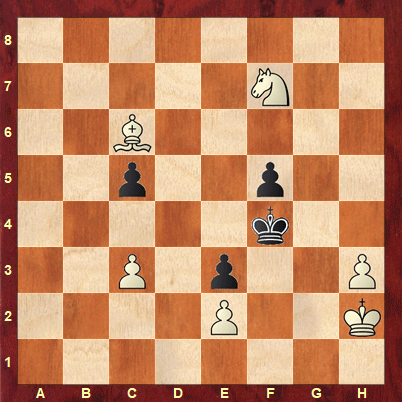
Albany Evening Journal 7 January 1893
This is rather more sophisticated, but the short mates after knight moves might be considered unsatisfactory.
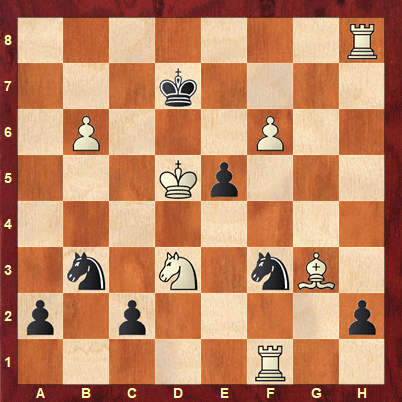
Albany Evening Journal 28 January 1893
Another use of a familiar theme, with a queen sacrifice as a bonus.
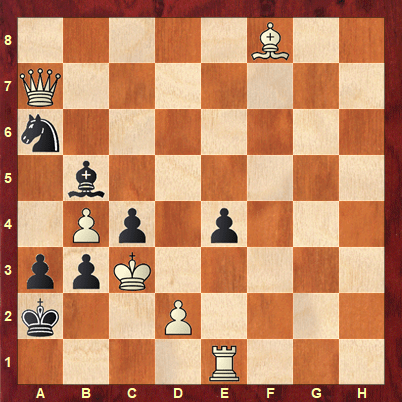
Albany Evening Journal 11 February 1893
This one is another simple three-mover.
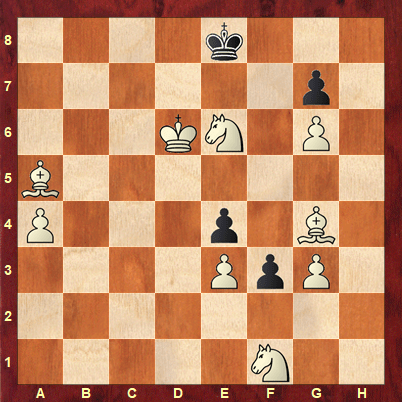
Albany Evening Journal 18 March 1893
In August he had a two-mover published in The Field.
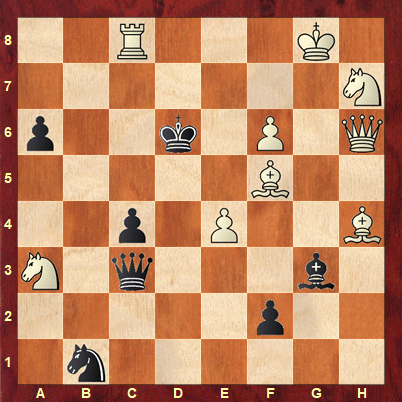
The Field 5 August 1893
From the same month, there was another three-mover.
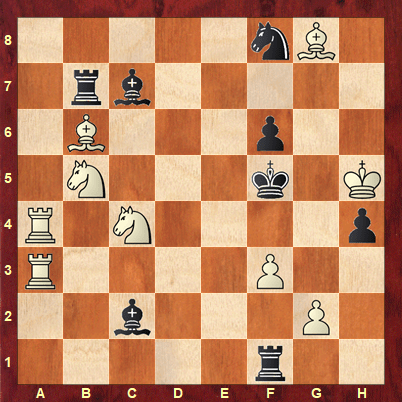
Albany Evening Journal 19 August 1893
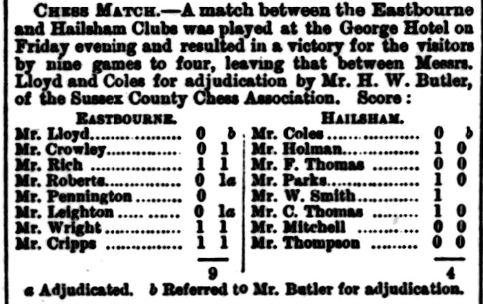
By November, Crowley had joined Eastbourne Chess Club, soon finding himself on Board 2 in a club match.
The following month he had a selfmate published in the British Chess Magazine. White plays and compels Black to deliver checkmate on the second move.
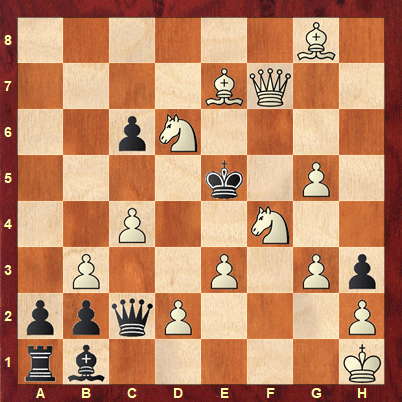
British Chess Magazine December 1893
Crowley conceived the grandiose idea of making Eastbourne the leading chess club in the country.
I wanted to arouse enthusiasm, to insist on study and practice and to make Eastbourne the strongest town in England.
To that end he started contributing a weekly column, under the name of Ta Dhuibh (a mangled attempt at Scottish Gaelic, perhaps the Black One or The Magician) to the Eastbourne Gazette (and Fashionable Visitors List), in which he detailed the club’s progress. He also published is own games and problems, without attaching his name to them. Some of the problems were taken, without acknowledgement, from other sources.
(Caveat: this article assumes that the unattributed games were won by Crowley, but this is not 100% certain in most cases, so the attributions should be treated with caution. Likewise, it’s possible that some of the problems attributed to him here weren’t original, but the originals have not yet been found.)
His first column included this game in which White (presumably Crowley) received pawn and move odds. I’d guess his opponent was local champion William Coupe, who gave him odds at the time.
[Event “Eastbourne Chess Club Handicap Tournament”]
[Date “1894.01.??”]
[White “Crowley, Aleister”]
[Black “Coupe, William?”]
[Result “1-0”]
[SetUp “1”]
[FEN “rnbqkbnr/ppppp1pp/8/8/8/8/PPPPPPPP/RNBQKBNR w KQkq – 0 1”]
[PlyCount “32”]
[Source “Eastbourne Gazette 24-01-1894”]
{[#]} 1. e4 d6 2. d4 e6 3. f4 Nf6 4. e5 Nd5 5. Bd3 g6 6. h4 Nc6 7. h5 Be7 8. hxg6 Bh4+ 9. Kf1 hxg6 10. g3 Bf6 11. Bxg6+ Kd7 12. Rxh8 Bxh8 13. c4 Nde7 14. Be4 Nf5 15. Bxf5 exf5 16. d5 Ne7 White mates in four moves 1-0
On 31 January he reported, unhappily, on a narrow defeat by Hailsham, where he won this game on top board.
[Event “Hailsham v Eastbourne B1”]
[Date “1894.01.26”]
[White “Coles, John Berriman Campion”]
[Black “Crowley, Aleister”]
[Result “0-1”]
[Source “Eastbourne Gazette 31-01-1894”]
1. e4 c5 2. d4 cxd4 3. Qxd4 Nc6 4. Qd1 Nf6 5. Bc4 Qa5+ 6. c3 Nxe4 7. Qf3 Nf6 8. Qf4 e5 9. Qd2 Ne4 10. Qd5 Qxd5 11. Bxd5 Nf6 12. Bb3 d5 13. h3 Bc5 14. Ne2 O-O 15. O-O Be6 16. Nd2 Rad8 17. a3 d4 18. Bxe6 fxe6 19. Nb3 Bb6 20. Bg5 h6 21. Bxf6 Rxf6 22. Rad1 d3 23. Ng3 Rf4 24. Nd2 Ne7 25. Nf3 e4 26. Nd2 e3 27. fxe3 Bxe3+ 28. Kh2 Bxd2 29. Rxd2 Rxf1 30. Nxf1 e5 31. Ng3 Kf7 32. Ne4 Ke6 33. Nc5+ Kf5 34. Rxd3 Rxd3 35. Nxd3 e4 36. Ne1 Nd5 37. g3 Ne3 38. Kg1 Nc4 39. Kf2 Nxb2 40. Ke2 Nc4 41. Nc2 g5 42. Ne3+ Nxe3 43. Kxe3 h5 44. c4 Ke5 45. a4 b6 46. g4 hxg4 47. hxg4 a6 0-1
At this point, here’s a note from YACPDB. The problems were all unattributed, some, but not all, composed by Crowley. Some of them were unsound, but recent attempts have been made to ascertain his intentions. This article will include Crowley’s surviving sound problems, along with one resurrected composition, which you’ll see immediately below.
In 1894, under the pseudonym Ta Dhuibh, Crowley composed problems and edited a column in the Eastbourne Gazette called Chess Notes. Left out uncredited were problems no.7 (7 March 1894) by Samuel Loyd, no.9(21 March 1894) by Frank M. Teed, no.14 (24 April 1894) by Jose Tolosa Y Carreras, no.15 (9 May 1894) by Charles W. White, no.17(6 June 1894) by Clarence H. Latting, no.18 (13 June 1894) by Benjamin G. Laws, no.19 (20 June 1894) by Charles Planck, and no.20 (27 June 1894) by Benjamin G. Laws.
His first problem, published on 7 February, was unsound, but here’s a recent corrected version provided by Luke Neyndorff. The key move is quite spectacular.
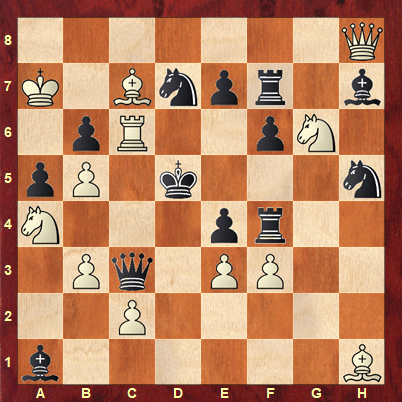
Eastbourne Gazette 7 February 1894
Here’s the following week’s column, reporting a loss against Lewes.
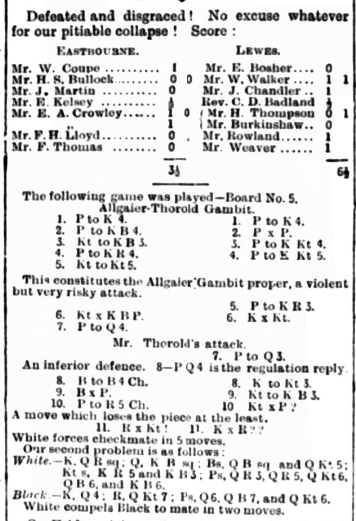
Disgraced. Pitiable. Writing like that was hardly going to endear him to his clubmates, most of whom would have had families, jobs and other interests, seeing chess only as a pleasurable hobby.
The Eastbourne Board 6 failed to show, so Crowley played a game against him as well as two on Board 5.
Here’s the first of them.
[Event “Eastbourne v Lewes B5”]
[Date “1894.02.??”]
[White “Crowley, Aleister”]
[Black “Thompson, H.”]
[Result “1-0”]
[Source “Eastbourne Gazette 14-02-1894”]
1. e4 e5 2. f4 exf4 3. Nf3 g5 4. h4 g4 5. Ng5 h6 6. Nxf7 Kxf7 7. d4 d6 8. Bc4+ Kg6 9. Bxf4 Nf6 10. h5+ Nxh5 11. Rxh5 Kxh5 12. Bf7+ 1-0
You’ll note that White can force checkmate in 3 moves after 12… Kh4 13. Qd3 or Kd2.
The problem, another self-mate in 2 was also published in that month’s British Chess Magazine. It might or might not, given the composer’s religious views, be significant that the black king, in the four variations, makes the sign of the cross.
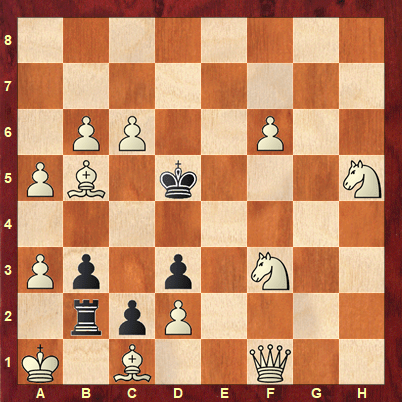
British Chess Magazine February 1894
The following week saw the publication of this game, played ‘some time ago’. Let’s again assume Crowley was White.
[Event “Casual Game”]
[Date “1893.??.??”]
[White “Crowley, Aleister”]
[Black “?”]
[Result “1-0”]
[Source “Eastbourne Gazette 21-02-1894”]
1. e4 e5 2. Nf3 Nc6 3. Bb5 Nf6 4. d4 exd4 5. e5 Ne4 6. Nxd4 Be7 7. O-O Nxd4 8. Qxd4 Nc5 9. f4 b6 10. f5 Nb3 11. Qe4 Nxa1 12. f6 Bc5+ 13. Kh1 Rb8 14. e6 Rg8 15. Qxh7 Rf8 16. exf7+ Rxf7 17. Re1+ Be7 18. Qg8+ Rf8 19. f7# 1-0
Here’s that week’s problem, a mate in 2.
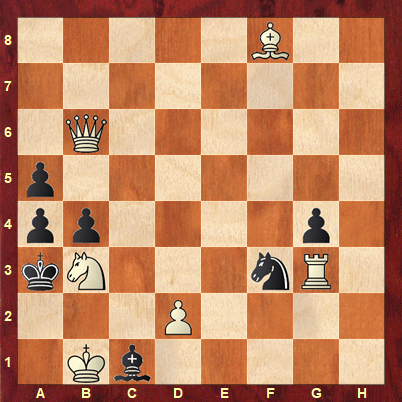
Eastbourne Gazette 21 February 1894
The end of February delivered this game, ‘played on November 3rd last year’.
[Event “Eastbourne Chess Club”]
[Date “1893.11.03”]
[White “NN”]
[Black “Crowley, Aleister”]
[Result “0-1”]
[Source “Eastbourne Gazette 28-02-1894”]
1. e4 c5 2. Nf3 Nc6 3. c3 g6 4. Bc4 e6 5. d4 cxd4 6. cxd4 Bg7 7. e5 d5 8. Bb5 Qa5+ 9. Nc3 a6 10. Bxc6+ bxc6 11. Bd2 Qc7 12. Ng5 f6 13. exf6 Nxf6 14. O-O O-O 15. Qe2 e5 16. dxe5 Ng4 17. f4 Qb6+ 18. Kh1 a5 19. Na4 Qa7 20. e6 Nf6 21. Rac1 Ba6 22. Qe5 Ng4 23. Qe1 Bxf1 24. Nc5 Bc4 25. e7 Qxc5 26. Qe6+ Kh8 27. Nf7+ Rxf7 28. Qxf7 0-1
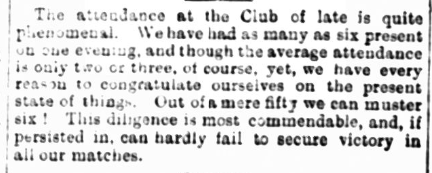
His frustration at the lack of support for club evenings was evident.
Here’s that week’s problem, where the black king again makes the sign of the cross.
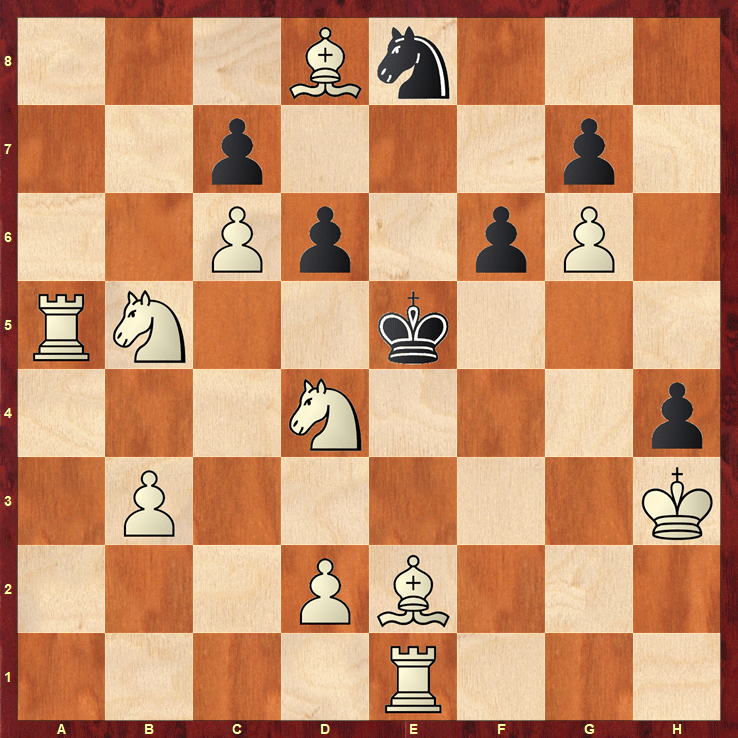
Eastbourne Gazette 28 February 1894
In March, Eastbourne finally managed to win a match, against Uckfield. This victory incited their young columnist to pen a limerick.
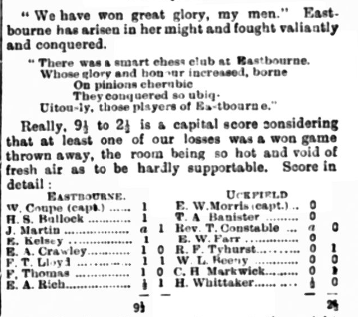
There was a smart chess club at Eastbourne
Whose glory and honour increased, bourne
On pinions cherubic
They conquered so ubiq-
Uitously, those players of Eastbourne
One of that week’s problems:
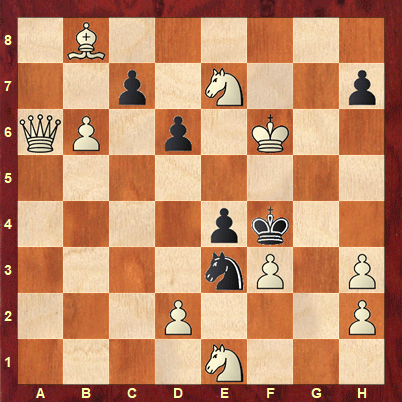
Eastbourne Gazette 7 March 1894
There was another problem, but the notation was clearly wrong and Neyndorff’s attempted version is a very long way from what was published.
Next week:
[Event “Eastbourne Club Championship”]
[Date “1894.03.09”]
[White “Crowley, Aleister”]
[Black “NN”]
[Result “1-0”]
[Source “Eastbourne Gazette 14-03-1894”]
1. e4 e5 2. f4 exf4 3. Nf3 Be7 4. Bc4 Bh4+ 5. g3 fxg3 6. O-O gxh2+ 7. Kh1 d5 8. Bxd5 Nf6 9. Bxf7+ Kxf7 10. Nxh4 Rf8 11. e5 Qd5+ 12. Nf3 Ng4 13. d4 Kg8 14. Nc3 Qc6 15. d5 Qc5 16. Qe2 Bd7 17. e6 Be8 18. Bg5 c6 19. e7 Rf7 20. Qe6 Nf2+ 21. Kxh2 cxd5 22. Ne5 Nc6 23. Nxf7 Bxf7 24. Qf5 Nxe7 25. Bxe7 Qxe7 26. Rxf2 {and White mated on his 41st move} 1-0
On to March 21, when Eastbourne drew a match against Hastings 2nd team.
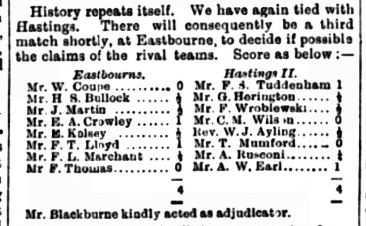
As usual, I assume the game below was his.
[Event “Eastbourne v Hastings 2 B4”]
[Date “1894.03.??”]
[White “Crowley, Aleister”]
[Black “Wilson, C M”]
[Result “1-0”]
[Source “Eastbourne Gazette 21-03-1894”]
1. e4 e5 2. Nf3 Nc6 3. Bb5 Nf6 4. O-O Bc5 5. Bxc6 dxc6 6. Nxe5 Qd4 7. Nf3 Bg4 8. Nxd4 Bxd1 9. Rxd1 Bxd4 10. c3 Bb6 11. e5 Ng4 12. d4 O-O-O 13. Bf4 Rhe8 14. Nd2 c5 15. h3 Nh6 16. Bxh6 gxh6 17. Nf3 cxd4 18. cxd4 Rd5 19. Rd3 c5 20. Rc3 Kd7 21. dxc5 Bxc5 22. Rac1 b6 23. b4 Bxb4 24. Rc7+ Ke6 25. R1c6+ Kf5 26. Rxf7+ Ke4 27. Rc4+ Kd3 28. Rxb4 Ra5 29. Rd7+ Kc3 30. Rb3+ Kc4 31. Nd2+ Kc5 32. Rc7+ Kd5 33. Rd3+ Ke6 34. Rd6+ Kf5 35. Rf7+ {and mates in 2 more moves. A very elegant finish, as Mr Blackburne, who was watching the game, remarked.} 1-0
A week later there was another victory to report.
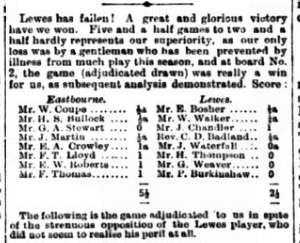
We know from the report that this was Crowley’s game.
[Event “Eastbourne v Lewes B5”]
[Date “1894.03.??”]
[White “Waterfall, J”]
[Black “Crowley, Aleister”]
[Result “0-1”]
[Source “Eastbourne Gazette 28-03-1894”]
1. e4 c5 2. Nc3 Nc6 3. d3 e6 4. Nf3 d5 5. exd5 exd5 6. Qe2+ Be7 7. Qd1 Be6 8. Bd2 Nf6 9. Be2 O-O 10. O-O Qc7 11. Ne1 d4 12. Ne4 Nxe4 13. dxe4 Bd6 14. g3 f5 15. Bf3 Rf6 16. Nd3 c4 17. Nf4 Raf8 18. exf5 Bf7 19. Bd5 Bxf4 20. Bxf7+ Qxf7 21. Bxf4 Rxf5 22. Qd2 h6 23. h4 Qg6 24. Kh2 Qh5 25. Qd1 Qf7 26. Qd2 Qf6 27. Kh3 g5 28. hxg5 hxg5 29. Bc7 Rf7 30. g4 Rb5 0-1
In April there was a defeat to report in the Macarthur Cup, but the Eastbourne secretary (Crowley) tried to get the Brighton team disqualified. Later reports suggested that it was claimed that they had played their strongest players on the bottom boards, and that one of their players hadn’t been nominated.
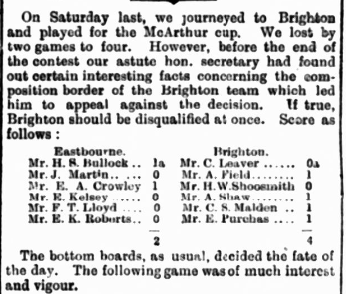
Crowley faced another young and ambitious opponent in 17-year-old Hector Shoosmith: I presume the interesting and vigorous game was theirs.
[Event “Eastbourne v Brighton McArthur Cup B3”]
[Date “1894.03.31”]
[White “Crowley, Aleister”]
[Black “Shoosmith, Hector William”]
[Result “1-0”]
[Source “Eastbourne Gazette 04-04-1894”]
1. e4 e5 2. f4 exf4 3. Nf3 g5 4. Bc4 d6 5. O-O h6 6. d4 Ne7 7. Nc3 Bg7 8. e5 d5 9. Bb3 c6 10. Ne2 Ng6 11. g3 g4 12. Nxf4 Nxf4 13. Bxf4 gxf3 14. Qxf3 Be6 15. c3 Nd7 16. Bc2 Nf8 17. Qh5 Qd7 18. Bd2 Bg4 19. Qh4 Ng6 20. Bxg6 fxg6 21. e6 Bxe6 22. Rae1 g5 23. Qg4 O-O-O 24. Rxe6 h5 25. Qe2 h4 26. Bxg5 Rdg8 27. Re7 Qh3 28. g4 Bxd4+ 29. cxd4 Rxg5 30. Re8+ Rxe8 31. Qxe8+ Kc7 32. Qe7+ 1-0
That week’s problem featured the Four Horsemen of the Apocalypse.
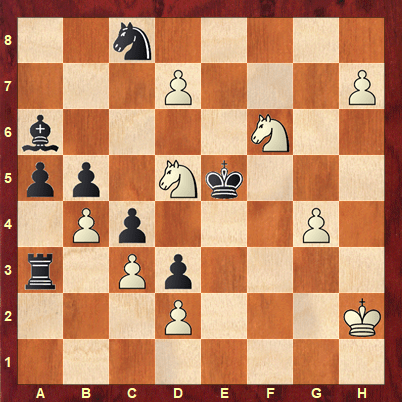
Eastbourne Gazette 4 May 1894
By April the matches and competitions had finished (or, in the case of the handicap tournament, aborted), but the club welcomed a surprise visitor.
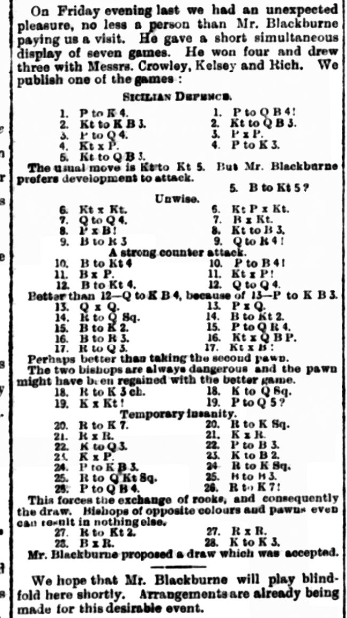
Again, we assume, although cannot be 100% certain, that the game was played by Crowley.
[Event “Simultaneous Display: Eastbourne”]
[Date “1894.04.13”]
[White “Blackburne, Joseph Henry”]
[Black “Crowley, Aleister”]
[Result “1/2-1/2”]
[Source “Eastbourne Gazette 18-04-1894”]
1. e4 c5 2. Nf3 Nc6 3. d4 cxd4 4. Nxd4 e6 5. Nc3 Bb4 6. Nxc6 bxc6 7. Qd4 Bxc3+ 8. bxc3 Nf6 9. Ba3 Qa5 10. Bb4 c5 11. Bxc5 Nxe4 12. Bb4 Qd5 13. Qxd5 exd5 14. Rd1 Bb7 15. Be2 a5 16. Ba3 Nxc3 17. Rd3 Nxe2 18. Re3+ Kd8 19. Kxe2 d4 20. Re7 Re8 21. Rxe8+ Kxe8 22. Kd3 f6 23. Kxd4 Kf7 24. c3 Re8 25. Rb1 Bc6 26. c4 Re2 27. Rb2 Rxb2 28. Bxb2 Ke6 1/2-1/2
From the same issue, a mate in 3 which was also published in the May 1894 issue of the British Chess Magazine.
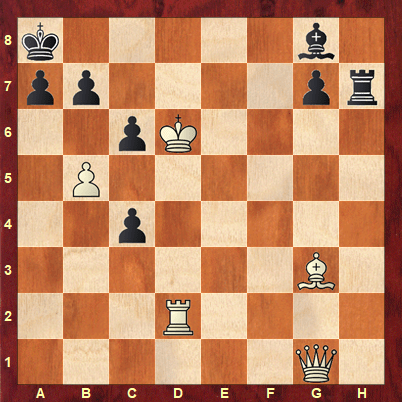
Eastbourne Gazette 18 April 1894
On 9 May he published two games, a win by Steinitz from his World Championship match against Lasker, and the following game. Was it one of his? Who knows?
[Event “Eastbourne Chess Club?”]
[Date “1894.??.??”]
[White “Crowley, Aleister”]
[Black “NN”]
[Result “1-0”]
[Source “Eastbourne Gazette 09-05-1894”]
1. e4 e5 2. Nf3 Nc6 3. Bb5 Nf6 4. O-O Nxe4 5. d4 Be7 6. Qe2 Nd6 7. Bxc6 bxc6 8. dxe5 Nb7 9. Nd4 O-O 10. Nc3 Nc5 11. Re1 Ne6 12. Nf5 Bg5 13. Ne4 Bxc1 14. Raxc1 Nf4 15. Qe3 Ng6 16. Nf6+ Kh8 17. Nh5 d6 18. Nfxg7 Nxe5 19. Qc3 f6 20. f4 Ng6 21. Ne8 Ne5 22. fxe5 fxe5 23. Rxe5 {White announced mate in 7, starting with this move.} 1-0
In May, Crowley was selected to represent Sussex in a match against North London. You’ll see previous Minor Piece subjects Charles Dealtry Locock and George Archer Hooke were both taking part.
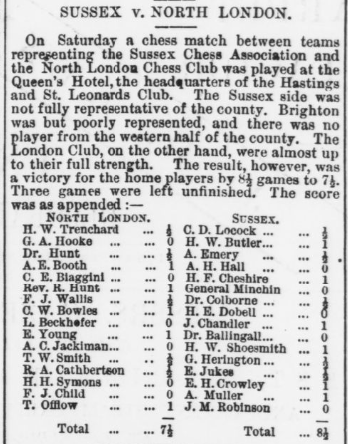
He published what must have been his win (as he was the only winner from Eastbourne in his column.
[Event “Sussex v North London (Brighton) B14”]
[Date “1894.05.19”]
[White “Symons, H H”]
[Black “Crowley, Aleister”]
[Result “0-1”]
[Source “Eastbourne Gazette 30-05-1894”]
1. e4 c5 2. Bc4 Nc6 3. Nf3 d6 4. O-O g6 5. d4 cxd4 6. Nxd4 Bg7 7. Nxc6 bxc6 8. Qf3 Nf6 9. e5 dxe5 10. Qxc6+ Bd7 11. Qa6 O-O 12. Bg5 Ne4 13. Be3 Nd6 14. Bd5 Rb8 15. b3 Bb5 16. Qxa7 Bxf1 17. Kxf1 e6 18. Bc6 Rc8 19. Ba4 Nb5 20. Na3 Nxa7 21. Bxa7 Qe7 22. Nb5 Rxc2 23. Be3 e4 24. Rd1 Rd8 25. Rb1 Qf6 26. b4 Bh6 27. Bb6 Rxf2+ 28. Bxf2 Rd2 0-1
The same issue also featured this problem.
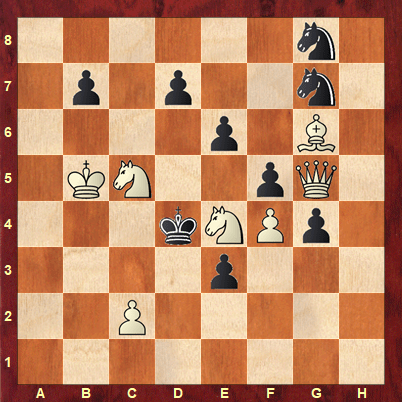
Eastbourne Gazette 30 May 1894
As summer approached, Crowley was still frustrated by participants in the handicap tournament not playing their games. He wasn’t afraid to name names.
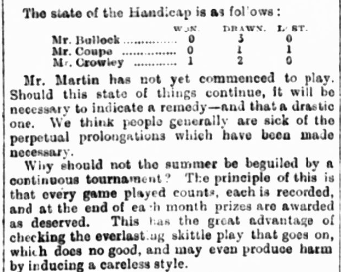
This game was published in two episodes, before and after adjournment.
[Event “Eastbourne Club Championship”]
[Date “1894.06.??”]
[White “Crowley, Aleister”]
[Black “Martin, J”]
[Result “1-0”]
[Source “Eastbourne Gazette 13-06-1894/04-07-1894”]
1. c4 e6 2. g3 Nf6 3. Nc3 Nc6 4. Bg2 d5 5. cxd5 exd5 6. Nf3 Be6 7. O-O Bd6 8. d3 O-O 9. Ng5 Qd7 10. Nxe6 fxe6 11. e4 Ne7 12. f4 e5 13. fxe5 Bxe5 14. Nxd5 Nfxd5 15. Rxf8+ Rxf8 16. exd5 Nxd5 17. Qh5 Bd4+ 18. Kh1 Nf6 19. Qh4 c5 20. Bf4 Ng4 21. h3 Nf2+ 22. Kh2 Nxd3 23. Be4 Nxf4 24. Bxh7+ Kf7 25. Qxf4+ Bf6 26. Qc4+ Ke8 27. Re1+ Kd8 28. Qf4 b6 29. Qb8+ Qc8 30. Qd6+ Qd7 31. Qxf8+ Kc7 32. Qe8 1-0
The unfortunate Mr Martin was berated again the following week, which also tells us he was Black in the game above. You’ll see that William Coupe appears twice, in adjacent columns, his recreation on the left and his business on the right.
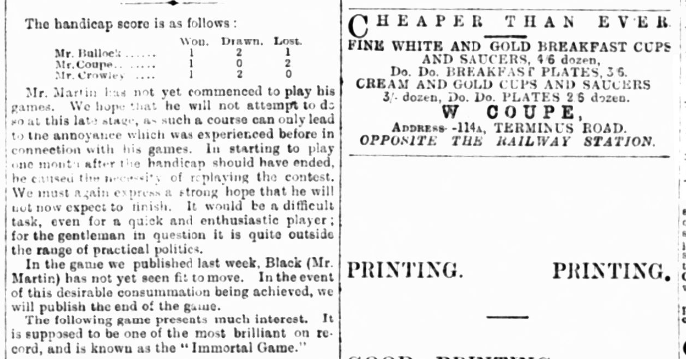
With none of his own games to publish, he had to resort to Adolf Anderssen instead.
This was to be Crowley’s final column.
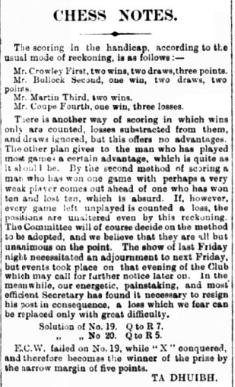
It wasn’t to be his final appearance in the Eastbourne Gazette, though.
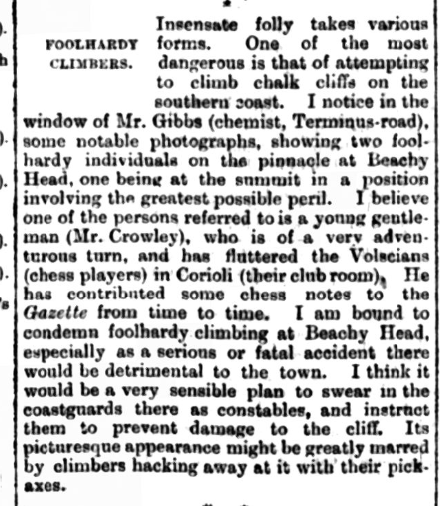
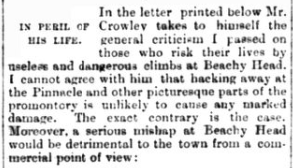
By now this foolhardy climber had travelled to Europe on what we’d now call a gap year, indulging in one of his other obsessions, mountaineering in the Alps.
This paragraph had been brought to his attention, and he replied from Austria. You’ll see that by now he was Aleister rather than the hated Alexander or Alick.
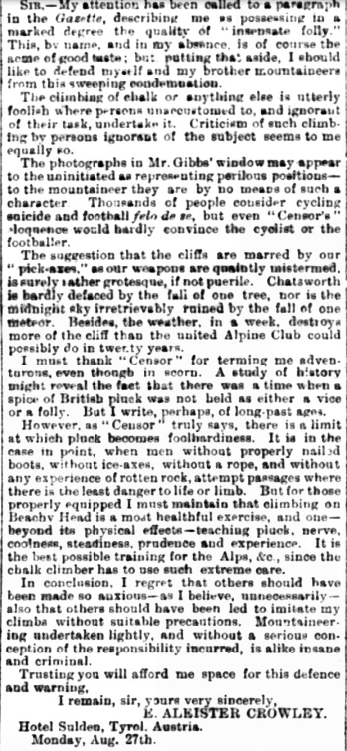
We’ll leave Aleister there for now. A brilliant and charismatic, but emotionally disturbed young man, whose enthusiasm and ambition, grandiosity and delusion, came close to terminating Eastbourne Chess Club. One wonders what the Eastbourne chess players made of him: middle aged hobbyists who enjoyed a quiet game after work being harangued by an upstart youth for playing badly, not playing enough and not studying enough.
Next time you’ll find out, if you don’t know already, what happened at University and beyond.
Sources and Acknowledgements:
There have been two important articles about Crowley’s chess career: by Robert T Tuohey and by Chris Ravilious, which first appeared in CHESS (December 1997). You can find them combined on the Hastings & St Leonards Chess Club website here. There’s also more from Tuohey here.
ancestry.co.uk
findmypast.co.uk/British Newspaper Archives
Wikipedia (Crowley here)
chessgames.com (Crowley here)
yacpdb.org (Yet Another Chess Problem DataBase: Crowley here)
Hastings & St Leonards Chess Club website
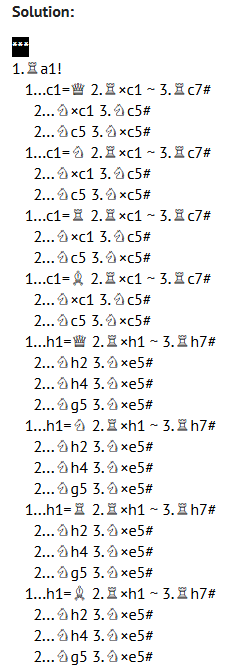
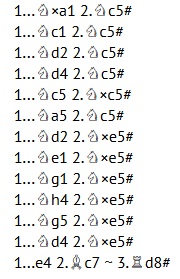
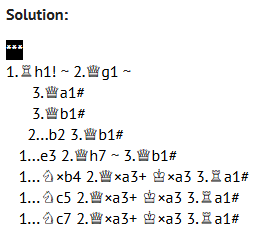
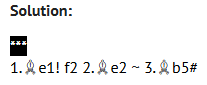
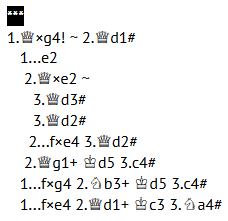
Problem Solutions (pasted from yacpdb.org)
Problem 1:
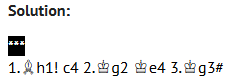
Problem 2:
Problem 3:
Problem 4:
Problem 5:
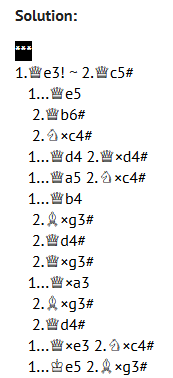
Problem 6:
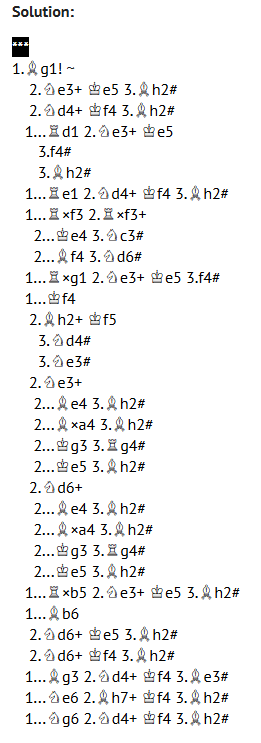
Problem 7:
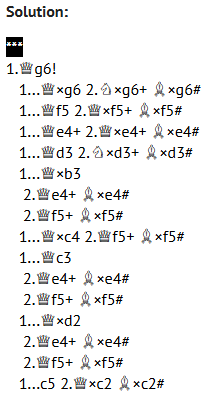
Problem 8:
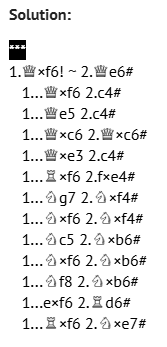
Problem 9:
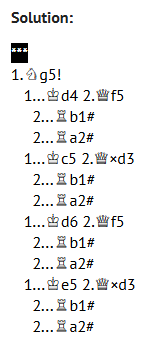
Problem 10:
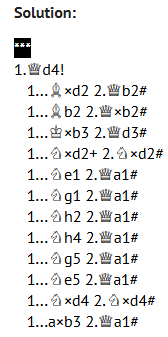
Problem 11:
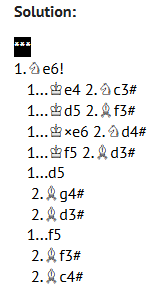
Problem 12:
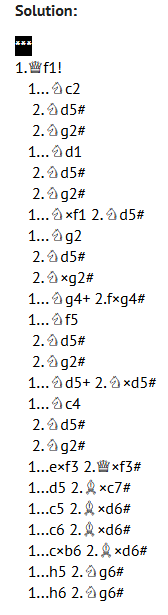
Problem 13:
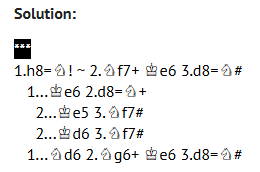
Problem 14:
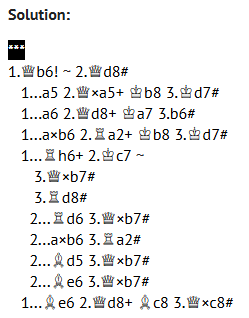
Problem 15:

 Minor Pieces
Leave a comment